
Step-by-Step Guide to Fire Hose Testing Using Hose Monster in UAE
December 16, 2025
How Testifire Combined Smoke & Heat Testers Improve Fire Alarm Compliance
December 30, 2025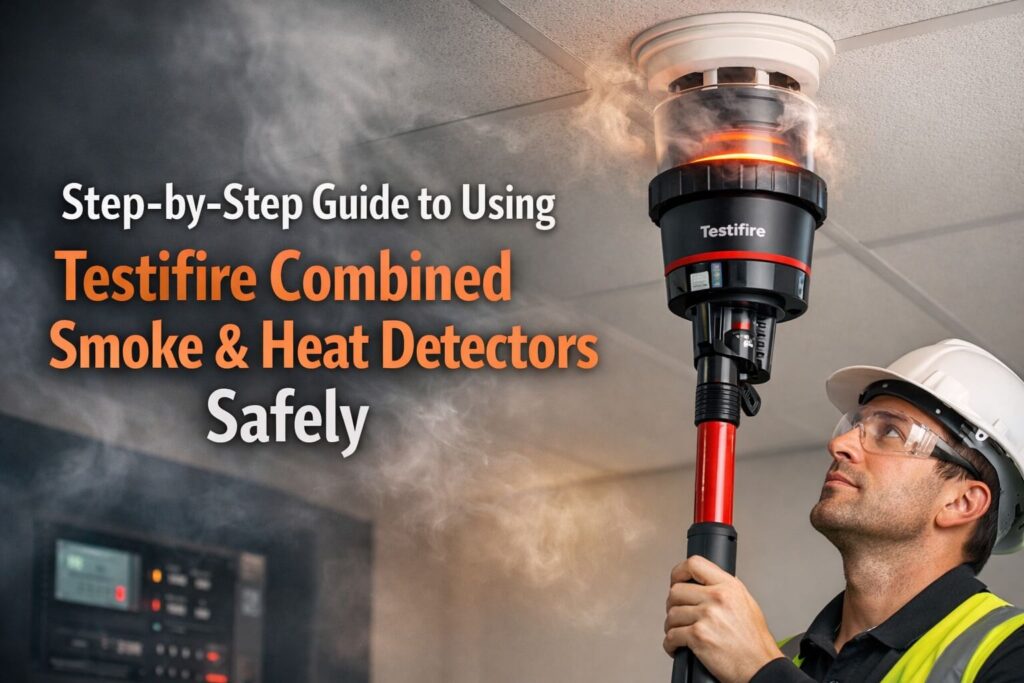
Fire detection systems are only reliable when they are tested correctly and consistently. Modern buildings increasingly use multi-sensor detectors that respond to both smoke and heat, making professional testing essential. This step-by-step guide explains how to safely and effectively test detectors using the Testifire Combined Smoke Heat system, ensuring compliance, accuracy, and minimal disruption.
Whether you are a facility manager, fire safety technician, or maintenance professional, using the right smoke detector tester ensures detectors respond as designed during real emergencies.
Why Proper Testing of Combined Smoke & Heat Detectors Matters
Combined smoke and heat detectors are designed to reduce false alarms while improving fire detection accuracy. However, these advanced detectors must be tested using realistic stimuli that replicate actual fire conditions.
Traditional methods or outdated tools often fail to activate both sensors correctly. This is where the Testifire Smoke and Heat Detector Tester stands out, offering controlled, repeatable, and compliant testing in one unit.
Proper testing ensures:
- Compliance with fire safety standards
- Early fault detection
- Reduced false alarms
- Improved occupant safety
Understanding the Testifire Fire Alarm Testing System
The Testifire Fire Alarm Testing System is a portable, battery-powered solution designed to test smoke, heat, and multi-sensor detectors safely. Unlike aerosol sprays or open heat sources, it delivers consistent test stimuli directly to the detector.
Compared to older tools, such as a solo smoke detector tester, Testifire provides the following:
- Cleaner testing with no residue
- Faster test cycles
- Safer operation at height
- Accurate multi-sensor activation
Step-by-Step Guide to Using Testifire Combined Smoke & Heat Detectors Safely
Step 1: Prepare the Test Area
Before starting, inform building occupants and monitoring centers about the scheduled test. Disable alarm notifications if required to avoid unnecessary evacuations. Visually inspect the detector for damage, obstruction, or contamination. Testing a faulty or dirty detector may give misleading results.
Step 2: Set Up the Testifire Unit
Ensure the Testifire unit is fully charged and securely attached to the appropriate extension pole. Select the correct mode for the Combined Smoke Heat Detector Tester operation if your model allows mode selection. Always follow the manufacturer’s safety guidelines when assembling the equipment.
Step 3: Position the Tester Correctly
Carefully raise the Testifire unit until it encloses the detector head. Proper alignment is critical to ensure both smoke and heat sensors receive accurate stimuli. Unlike a solo smoke detector tester, Testifire fully seals around the detector, preventing stimulus loss.
Step 4: Activate the Smoke Test
Initiate the smoke test function. The unit generates realistic, controlled smoke that simulates combustion particles.
Observe the detector response:
- LED indicators
- Control panel signal
- Audible alert (if applicable)
Allow sufficient time for the detector to register the smoke input.
Step 5: Apply the Heat Test
After the smoke test, activate the heat function. The system gradually increases temperature to simulate fire-generated heat without damaging the detector. This dual testing ensures both sensors function independently and together, which is critical for multi-sensor detector reliability.
Step 6: Confirm Alarm Activation
Verify that the fire alarm control panel receives the correct signal. Record the response time and detector ID as part of your maintenance log. If the detector does not respond correctly, it may require cleaning, recalibration, or replacement.
Step 7: Reset and Clear the Detector
Once testing is complete, allow the detector to cool and clear residual smoke naturally. Reset the alarm system and confirm normal operation. Testifire’s clean technology ensures no residue remains, unlike aerosol-based methods.
Safety Best Practices During Testing
- Never use open flames or uncontrolled heat sources.
- Avoid excessive testing duration on a single detector
- Always use manufacturer-approved equipment.
- Wear appropriate PPE when testing at heights
Following these practices ensures safe testing while extending detector lifespan.
Common Mistakes to Avoid
- Skipping heat testing on multi-sensor detectors
- Using outdated aerosol sprays
- Failing to document test results
- Not informing occupants before testing
Using a professional smoke detector tester like Testifire eliminates most of these risks.
Why Professionals Choose Testifire Over Traditional Tools
Fire safety professionals prefer Testifire because it combines speed, safety, and compliance in one system. Compared to a solo smoke detector tester, it offers more accurate simulation and reduced maintenance time. Trusted providers like Novus Fire and Security LLC recommend advanced testing solutions to maintain the highest safety standards across commercial and industrial facilities.
FAQs – Testifire Combined Smoke & Heat Testing
How often should combined smoke and heat detectors be tested?
Most fire safety standards recommend testing at least annually, with visual inspections performed more frequently depending on the environment.
Can Testifire replace a solo smoke detector tester?
Yes. Testifire can perform smoke-only tests while also providing heat and multi-sensor testing, making it a more versatile solution.
Is Testifire safe for sensitive environments?
Yes. It produces controlled, residue-free smoke and regulated heat, making it suitable for hospitals, offices, and data centers.
Do I need professional training to use TestFire?
Basic training is recommended to ensure correct positioning, timing, and documentation of test results.