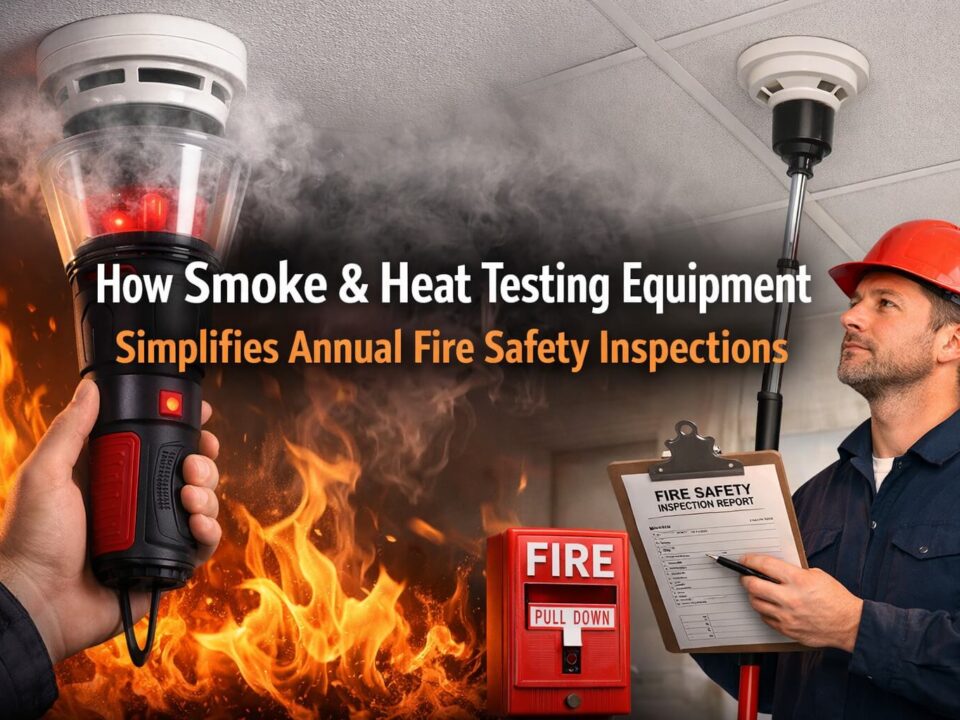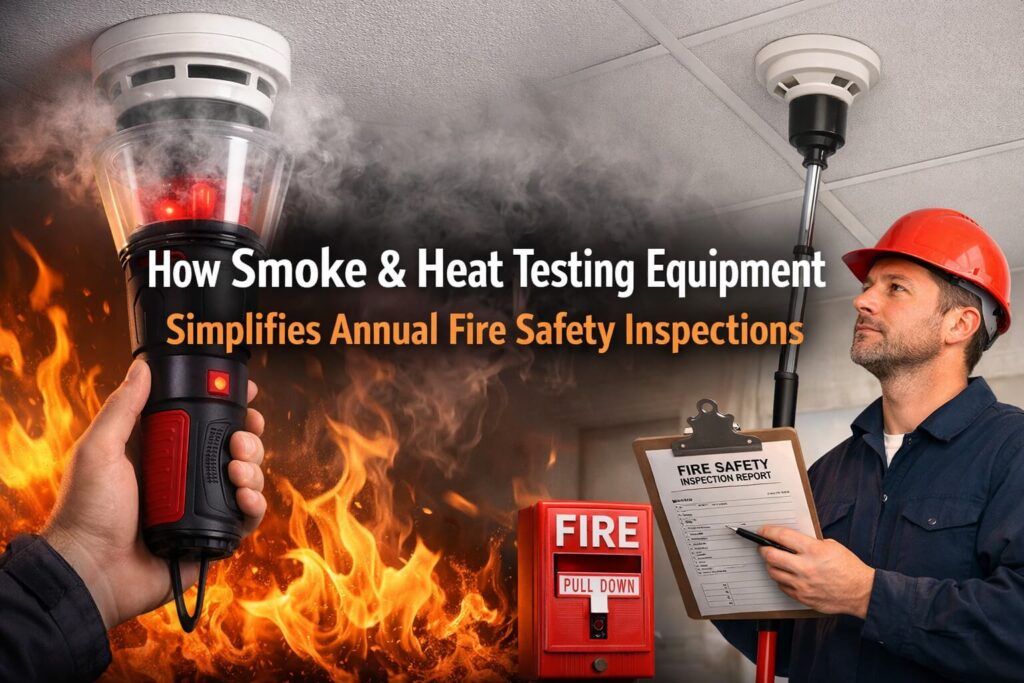

How Smoke & Heat Testing Equipment Simplifies Annual Fire Safety Inspections
January 5, 2026
Step-by-Step Process for Conducting Building Fire Alarm Testing Safely
January 16, 2026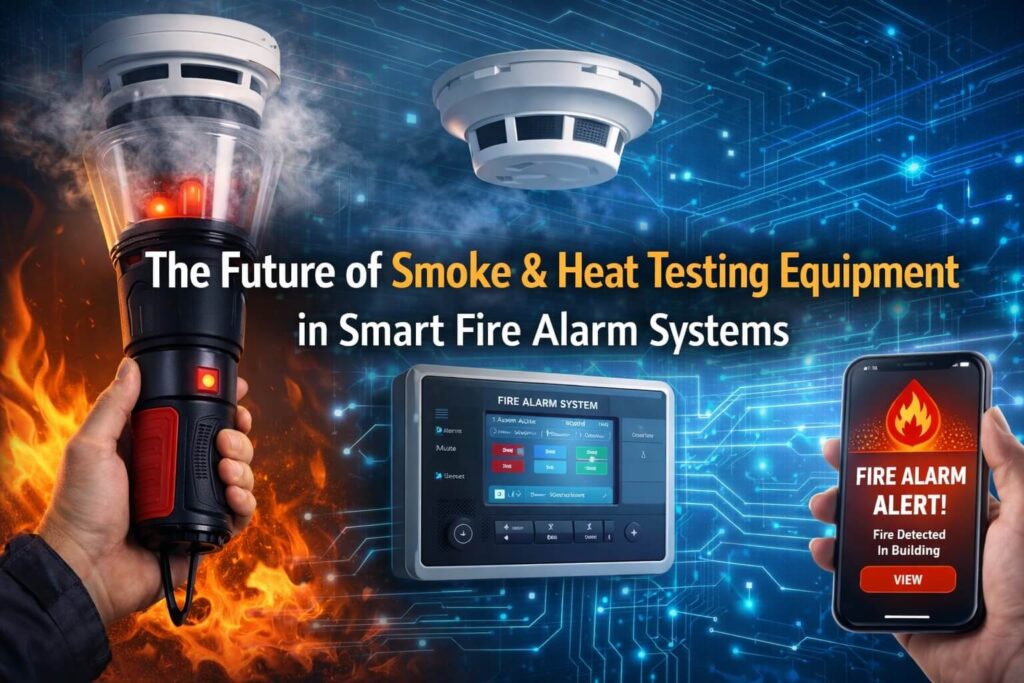
Fire alarm systems are evolving rapidly as buildings become smarter, more connected, and more data-driven. Traditional standalone detectors are increasingly being replaced by intelligent, networked systems capable of real-time monitoring, analytics, and predictive maintenance. As these systems advance, Smoke & Heat Testing Equipment must also adapt to ensure accurate testing, compliance, and long-term reliability.
In the future, fire safety inspections will rely not only on manual testing but also on smart diagnostics, sensor data, and automated reporting. Understanding how testing equipment fits into this ecosystem is essential for fire safety professionals, facility managers, and compliance teams.
The Shift Toward Smart Fire Alarm Systems
Smart fire alarm systems integrate smoke detectors, heat detectors, control panels, and building management systems into a single connected network. These systems can monitor detector performance, environmental conditions, and fault alerts in real time.
However, even the smartest systems still require physical testing to confirm sensors respond correctly to real fire stimuli. This is where modern Smoke Detector Testing Equipment and Heat Detector Testing Equipment remain indispensable.
Smart technology enhances detection—but compliant testing still validates performance.
Why Traditional Testing Methods Are No Longer Enough
Older testing tools were designed for conventional, standalone detectors. Devices such as the Solo 461 heat detector tester remain useful for specific applications, but they are limited when dealing with multi-sensor and addressable detectors used in smart systems.
Key limitations of traditional testing include:
- Inability to verify sensor interaction
- Manual documentation requirements
- Slower inspection processes
- Limited integration with digital systems
As fire alarm technology evolves, testing tools must support both physical validation and digital reporting.
The Role of Smoke & Heat Testing Equipment in Smart Systems
Modern Smoke & Heat Testing Equipment is designed to bridge the gap between physical testing and intelligent fire alarm networks. These tools safely simulate smoke and heat while allowing test results to be logged, analyzed, and linked to smart system data.
Advanced Smoke and Heat Alarm Testing System solutions enable technicians to
- Test smoke and heat sensors independently
- Validate multi-sensor logic
- Reduce false alarms through accurate calibration
- Maintain audit-ready digital records
This alignment between testing equipment and smart systems defines the future of fire safety compliance.
How Heat Detector Testers Are Evolving
Heat detectors remain critical in environments where smoke detection alone is unsuitable, such as kitchens, parking structures, and industrial facilities. While Heat Detector Testers have traditionally focused on simple temperature activation, future tools are becoming more precise and data-aware.
Next-generation Heat Detector Testing Equipment is expected to:
- Apply highly controlled heat profiles
- Support different detector types (fixed, rate-of-rise, multi-sensor)
- Reduce test duration without compromising safety
- Integrate results with smart fire panels
This evolution ensures accurate testing while protecting sensitive detector components.
Integration with Smart Monitoring and Reporting
One of the most significant changes ahead is how testing results are recorded and used. Smart fire alarm systems increasingly support cloud-based dashboards, automated alerts, and predictive maintenance.
Future Smoke & Heat Testing Equipment will play a key role by:
- Feeding test data directly into digital logs
- Supporting automated compliance reports
- Reducing manual paperwork
- Improving audit readiness
Fire safety professionals working with Novus Fire and Security LLC emphasize that digital integration is becoming just as important as physical testing accuracy.
Reducing False Alarms in Smart Buildings
False alarms remain a major challenge in modern buildings. Smart systems can analyze patterns, but they rely on correctly calibrated sensors.
By using advanced Smoke Detector Testing Equipment, technicians can:
- Verify correct sensitivity levels
- Test detectors under realistic conditions
- Identify sensors prone to nuisance alarms
Accurate testing supports smarter algorithms and more reliable alarm performance.
The Future of Compliance in Smart Fire Safety
Fire safety regulations continue to evolve alongside technology. Authorities increasingly expect:
- Accurate functional testing
- Consistent documentation
- Faster inspections
- Digital records
Modern Smoke & Heat Testing Equipment supports these expectations by delivering repeatable results that align with smart system data. This makes compliance easier to demonstrate during inspections and audits.
Training and Skills for the Next Generation of Technicians
As systems become smarter, technicians must understand both physical testing and digital systems. Future training will focus on:
- Correct use of advanced testing tools
- Interpreting smart system diagnostics
- Linking test results with compliance platforms
This dual skill set will define the next generation of fire safety professionals.
FAQs – Smoke & Heat Testing Equipment & Smart Systems
How does smoke and heat testing equipment support smart fire alarm systems?
It validates physical detector performance while supporting digital reporting and compliance within smart fire alarm networks.
Will traditional heat detector testers still be used in the future?
Yes, tools like the Solo 461 heat detector tester will remain useful, but they will increasingly be complemented by advanced testing systems.
Can smart fire alarm systems replace physical testing?
No. Smart systems enhance monitoring, but physical smoke and heat testing is still required to confirm detector response.
Does modern testing equipment reduce inspection time?
Yes. Integrated smoke and heat testing systems significantly reduce setup, testing, and documentation time.