How Professional Smoke Sensitivity Testing Helps Support Fire Alarm System Maintenance
November 5, 20265 Reasons Fire Safety Professionals Should Invest in Testifire 1001
November 17, 2026Industrial facilities such as manufacturing plants, oil and gas installations, chemical processing units, warehouses, and power generation facilities may operate in environments where fire hazards require continuous attention. Flammable materials, combustible gases, electrical equipment, and high-temperature processes can increase the importance of reliable fire detection systems.
Flame detectors are an important part of industrial fire protection because they are designed to identify specific radiation patterns associated with flames. However, installing these devices is only one part of an effective fire safety programme. Regular inspection, functional testing, maintenance, and accurate documentation are also necessary to help confirm that detection systems operate as intended.
Using the right Flame Detector Tester and compatible testing equipment can help technicians carry out inspections more consistently. This guide explains how suitable testing tools support industrial fire safety inspections and what to consider when selecting them.
How Can the Right Flame Detector Testing Equipment Improve Industrial Inspections?
The right flame detector testing equipment helps maintenance teams verify detector response, identify potential faults, and maintain inspection records.
Key benefits include:
- Functional verification: Helps confirm that a detector responds to its specified test stimulus.
- Technology compatibility: Supports testing of UV, IR, and UV/IR detector types when the equipment is designed for them.
- Consistent inspections: Provides a repeatable method for functional testing.
- Fault identification: Helps technicians identify detectors that may require further investigation.
- Maintenance efficiency: Supports organised inspection procedures across multiple industrial areas.
- Safety compliance support: Helps facilities follow applicable inspection procedures and manufacturer recommendations.
- Documentation: Makes it easier to record test results and maintenance activities.
Testing equipment must match the detector technology, model, and the manufacturer’s approved procedure. A test lamp alone does not establish that every part of a fire alarm or shutdown system is functioning correctly.
1. Understand the Role of Flame Detectors in Industrial Safety
Flame detectors are designed to identify radiation emitted by flames within specified spectral ranges. Depending on their technology, they may detect ultraviolet radiation, infrared radiation, or combinations of these signals.
Industrial facilities use flame detection systems in locations where rapid identification of a fire condition is important. Examples include:
- Fuel storage and handling areas.
- Chemical processing facilities.
- Gas turbine enclosures.
- Manufacturing production areas.
- Industrial paint and coating facilities.
- Power generation installations.
- Areas containing combustible liquids or gases.
A detector must be suitable for the environment and the fire hazards present. Its placement, field of view, sensitivity settings, and maintenance condition can all influence performance.
2. Choose Testing Equipment Compatible with Detector Technology
Not all flame detectors operate using the same detection technology. Selecting compatible testing equipment is essential for meaningful functional checks.
UV Flame Detector Tester
A UV flame detector tester is designed to provide a suitable ultraviolet test stimulus for compatible UV detectors. It helps technicians check whether the detector responds according to the manufacturer’s specified testing procedure. Before testing, verify the detector’s model, spectral response, and approved test equipment requirements.
IR Flame Detector Tester
An IR flame detector tester provides an infrared stimulus designed for compatible infrared flame detectors. Different detectors may operate across different infrared wavelengths, so compatibility must be confirmed before testing. Using an unsuitable IR source may produce an invalid test or fail to verify the detector’s intended response.
UV/IR Flame Detector Testing
UV/IR detectors use both ultraviolet and infrared sensing technologies. Testing these detectors requires equipment and procedures that are approved for the particular detector model. Technicians should confirm whether the testing device provides the required stimulus for both sensing channels and follow the manufacturer’s instructions.
3. Use a Suitable Flame Detector Test Lamp
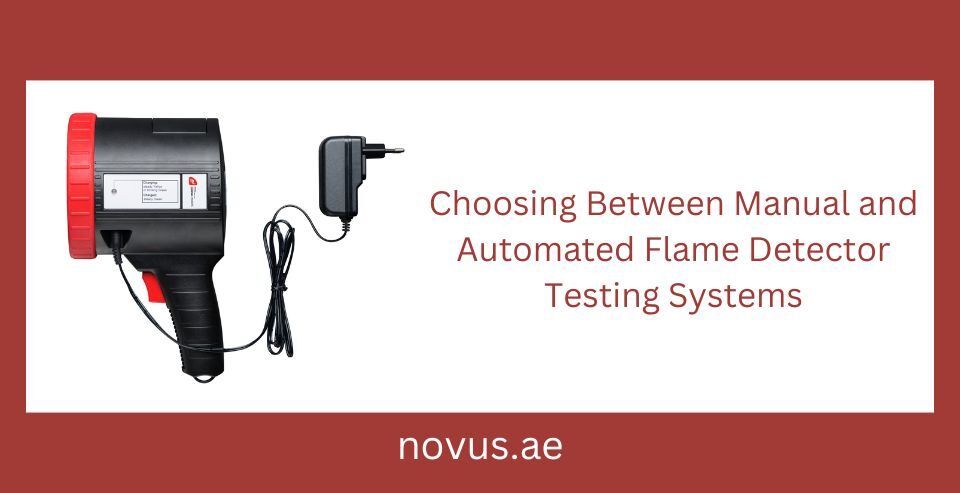
A Flame detector test lamp is a practical tool used during functional inspections of compatible detectors. It provides a controlled stimulus intended to simulate a flame signature within the detector’s specified response range.
When selecting a test lamp, consider:
- Compatibility with the detector model.
- Supported UV or IR technology.
- Manufacturer-approved testing procedures.
- Operating distance and positioning requirements.
- Battery condition and power requirements.
- Test duration and operating instructions.
- Suitability for the industrial environment.
A test lamp should never be assumed to work with every flame detector. Always check compatibility and follow the equipment manufacturer’s guidance.
4. Develop a Standardised Inspection Procedure
A consistent inspection procedure helps maintenance teams avoid missed steps and makes test results easier to compare.
A typical functional testing workflow may include:
- Review the detector manufacturer’s instructions.
- Identify the detector model and technology.
- Inform the relevant control room and obtain required test authorisation.
- Follow site procedures for placing affected systems into an approved test or bypass condition, where applicable.
- Inspect the detector housing, lens, wiring, and mounting.
- Position the compatible test equipment according to the manufacturer’s instructions.
- Apply the approved test stimulus.
- Verify the expected detector response and associated system indication.
- Restore the system to its normal operating condition.
- Record the results and confirm that all temporary bypasses have been removed.
Testing should be conducted by authorised and suitably trained personnel. Site safety procedures and fire protection requirements must remain in place throughout the inspection.
5. Improve Inspection Efficiency Across Large Industrial Facilities
Large industrial facilities may contain dozens or hundreds of flame detectors installed across different process areas. Managing inspections manually without a structured plan can lead to missed equipment, inconsistent records, and unnecessary repeat visits.
Using suitable fire alarm testing equipment and organised inspection schedules can help maintenance teams work more efficiently.
Practical improvements include:
- Maintaining an updated detector inventory.
- Grouping inspections by plant area or equipment type.
- Recording detector model numbers and test equipment used.
- Scheduling inspections according to approved maintenance requirements.
- Tracking failed tests and outstanding corrective actions.
- Maintaining a record of test dates and technician details.
A centralised maintenance record also helps supervisors identify recurring faults and plan future maintenance activities.
6. Check Detector Condition Before Functional Testing
Functional testing should be supported by a visual inspection. Dust, oil deposits, paint, moisture, and other contamination may affect detector performance, depending on the design and environment.
Before testing, check:
- Detector lenses and optical windows.
- Housing condition and corrosion.
- Mounting stability and alignment.
- Wiring connections and cable entries.
- Physical obstructions within the field of view.
- Environmental contamination.
- Any fault or diagnostic indications.
Cleaning must follow the manufacturer’s instructions. Avoid using unsuitable chemicals or abrasive materials that could damage optical surfaces.
7. Understand the Difference Between Functional Testing and Sensitivity Testing
Functional testing and sensitivity testing are related but different activities. Functional testing checks whether the detector responds to an approved test stimulus and whether the expected alarm or indication is received. Sensitivity testing evaluates whether the detector’s response characteristics remain within the specified performance range.
The method depends on the detector design and manufacturer requirements. A successful functional test does not automatically prove that detector sensitivity is within specification. Industrial maintenance programmes should include the inspection and testing activities required by the applicable standards, system design, and manufacturer instructions.
8. Select Reliable Industrial Flame Detector Testing Tools
Choosing an Industrial flame detector tester requires more than comparing product prices. The equipment must suit the detector types installed at the facility and the conditions in which inspections are carried out.
Consider these factors:
- Technology compatibility: Check support for UV, IR, or UV/IR detector models.
- Manufacturer approval: Verify that the equipment is recommended or approved for the intended detector.
- Operating range: Review the specified testing distance and positioning requirements.
- Build quality: Consider durability and suitability for the intended work environment.
- Ease of operation: Select equipment technicians can use according to clear instructions.
- Power and maintenance: Check battery requirements, charging, and service support.
- Documentation: Request product specifications, operating instructions, and compatibility information.
Novus Fire and Security LLC provides fire detection testing equipment options for industrial applications. When evaluating products, confirm compatibility with your installed detectors and request the relevant technical documentation.
9. Maintain Testing Equipment and Inspection Records
Testing equipment also requires regular attention. A damaged, discharged, or poorly maintained tester may produce unreliable results or interrupt scheduled inspections.
Maintenance teams should:
- Inspect the test equipment before use.
- Check batteries and charging condition.
- Follow recommended maintenance intervals.
- Store equipment in suitable conditions.
- Review calibration or verification requirements where applicable.
- Maintain records of equipment servicing and faults.
Keep inspection records that identify the detector, test method, equipment used, result, technician, date, and corrective action. These records help demonstrate maintenance activity and support future troubleshooting.
10. Build a Reliable Industrial Fire Safety Testing Program
Effective flame detector testing should be part of a broader fire safety management programme. It should include routine inspections, approved functional tests, fault investigation, corrective maintenance, and periodic system reviews.
Review the programme whenever there are changes to the plant layout, process hazards, detector locations, or fire alarm system configuration. A well-organised programme helps ensure that testing is consistent, equipment is suitable, and maintenance findings are acted upon promptly.
Conclusion
Reliable flame detection is an important part of industrial fire protection. However, detector performance should not be assumed simply because equipment has been installed. Regular inspections and appropriate functional testing help maintenance teams identify potential problems and maintain confidence in the detection system.
Choosing the right Flame Detector Tester, using technology-compatible equipment, following approved procedures, and keeping accurate records can improve the consistency of industrial fire safety inspections.
Select testing equipment based on the installed detector models, manufacturer recommendations, and facility requirements. A structured maintenance programme can then support more dependable fire detection system testing and better overall industrial safety management.
Frequently Asked Questions
Q1. What is a flame detector tester used for?
A1. A flame detector tester provides a controlled test stimulus to check whether a compatible flame detector responds according to its manufacturer’s functional testing procedure. It helps technicians verify detector response during routine inspections.
Q2. What is the difference between a UV and IR flame detector tester?
A2. A UV flame detector tester provides an ultraviolet stimulus for compatible UV detectors, while an IR flame detector tester provides an infrared stimulus for compatible IR detectors. The correct tester depends on the detector’s technology and specifications.
Q3. How is UV/IR flame detector testing performed?
A3. UV/IR testing involves using manufacturer-approved equipment that provides the required test stimulus for the detector’s sensing technology. Technicians should follow the approved procedure, verify the expected alarm indication, and restore the system to normal operation after testing.
Q4. How often should industrial flame detectors be tested?
A4. Testing frequency depends on the detector manufacturer’s instructions, system design, applicable standards, risk assessment, and facility maintenance programme. Follow the approved inspection schedule rather than applying one universal interval to every detector.
Q5. How do I choose the right flame detector testing equipment?
A5. Check compatibility with the installed detector models, supported UV or IR technology, manufacturer approval, operating distance, power requirements, build quality, and technical support. Request product documentation before purchasing.