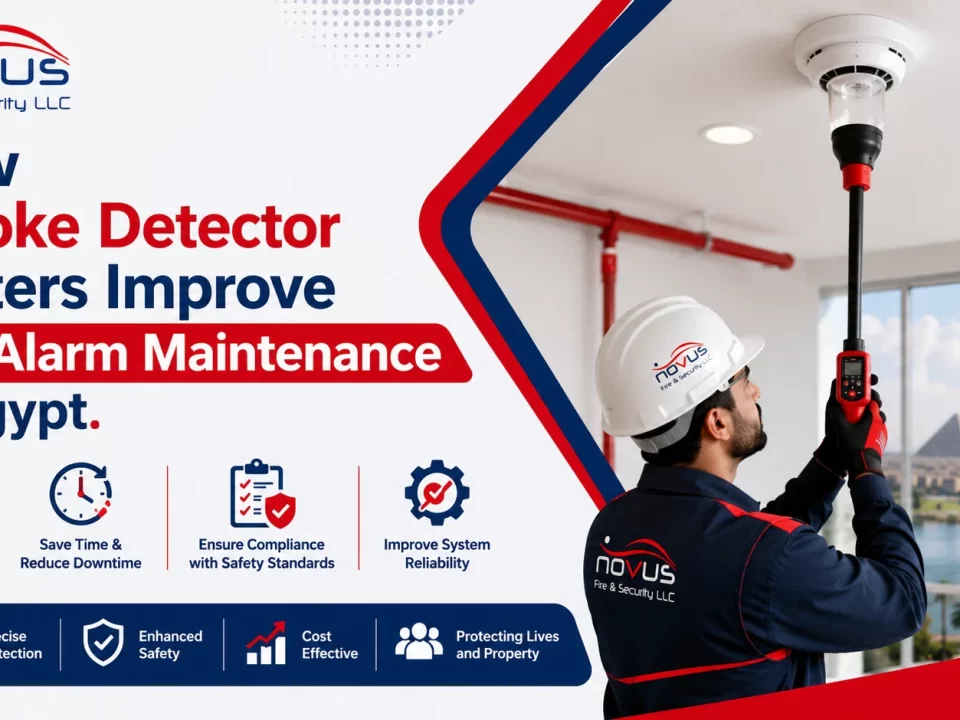
How Smoke Detector Testers Improve Fire Alarm Maintenance in Egypt
July 8, 2026
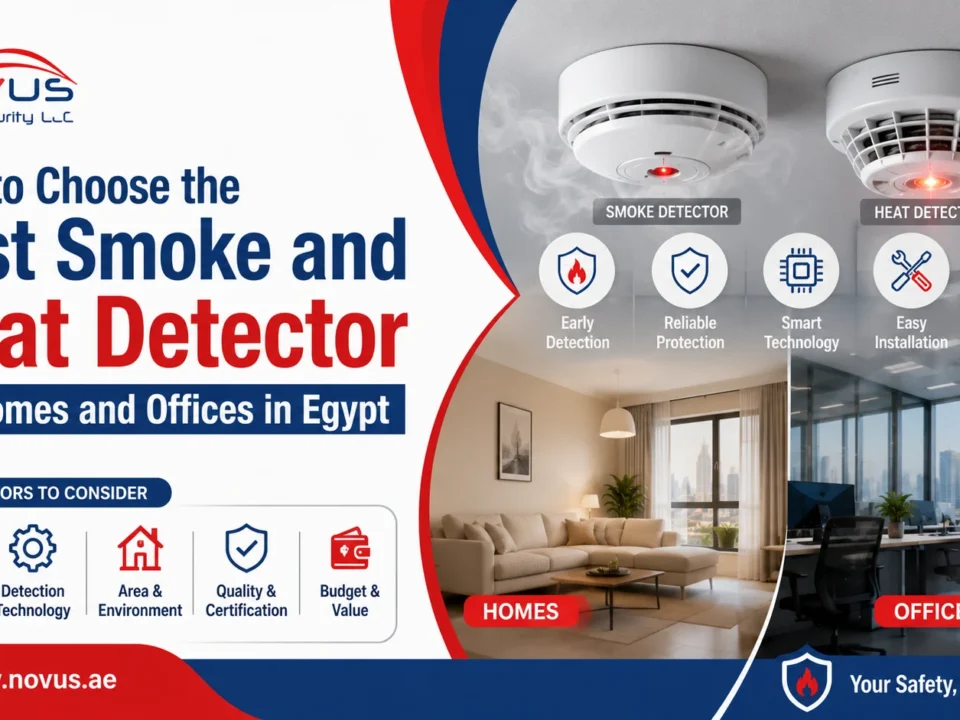
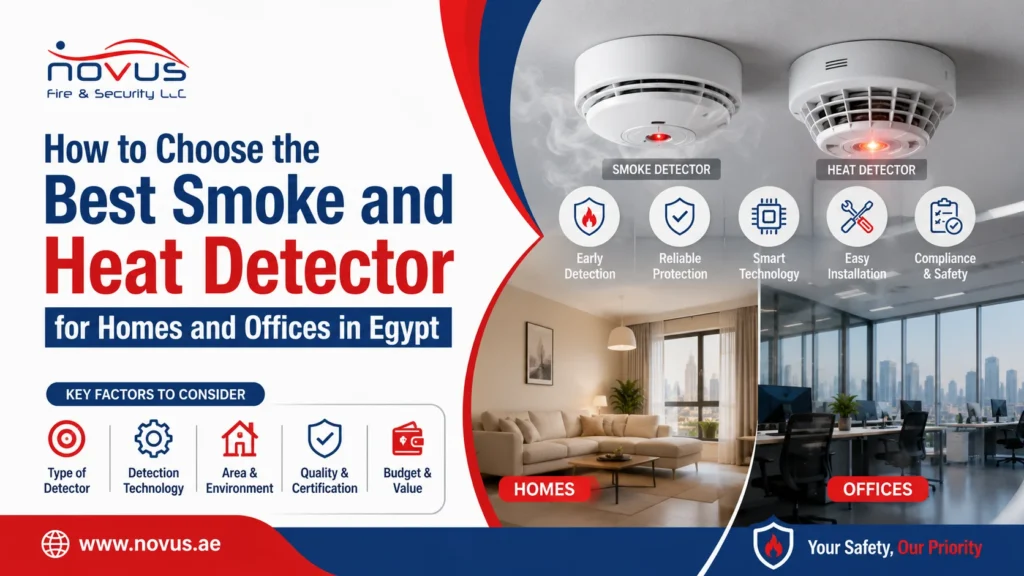
How to Choose the Best Smoke and Heat Detector for Homes and Offices in Egypt
July 17, 2026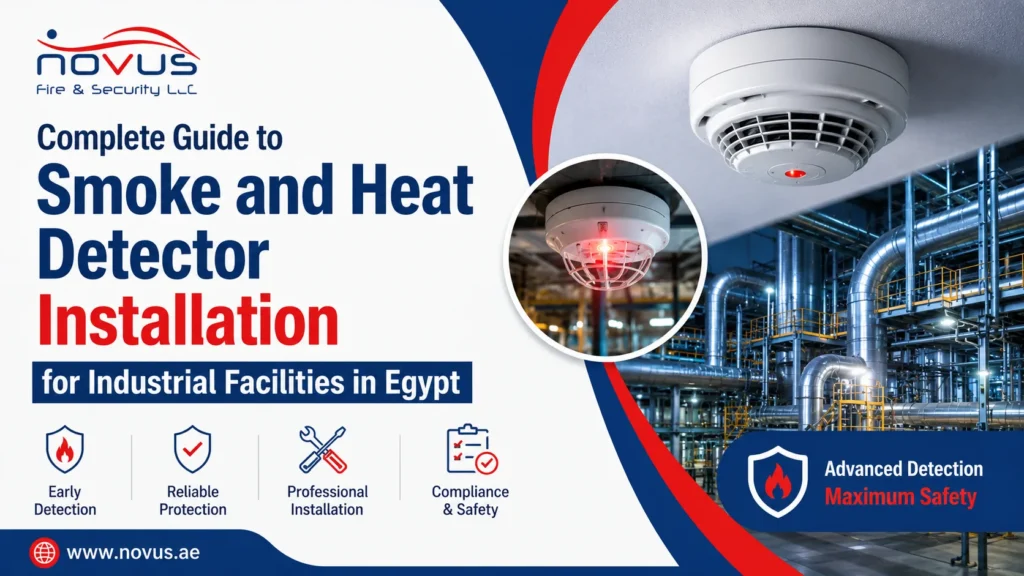
Industrial facilities handle valuable machinery, combustible materials, electrical systems, chemicals, warehouses, and production equipment that increase the risk of fire. Installing a reliable smoke heat detector in Egypt is one of the most effective ways to detect a fire at its earliest stage, helping protect employees, property, and business operations.
Whether you operate a factory, logistics warehouse, manufacturing plant, pharmaceutical facility, or oil and gas site, selecting the correct Smoke and Heat Detector in Egypt requires careful planning. Detector type, placement, environmental conditions, maintenance schedules, and compliance with fire safety standards all influence system performance. This guide explains everything industrial businesses need to know from choosing the right detector to installation best practices and long-term maintenance.
How Should Industrial Facilities Install Smoke and Heat Detectors?
Industrial facilities should install smoke and heat detectors based on the following:
- Risk assessment of each area
- Ceiling height and building layout
- Heat sources and airborne particles
- Type of industrial process
- Fire alarm system design
- Regular inspection and maintenance
- Compliance with applicable fire safety standards
Smoke detectors provide early warning where smoke develops first, while heat detectors perform better in dusty, humid, or high-temperature environments. Many facilities achieve better protection by using both technologies together.
Why Every Industrial Facility Needs a Smoke and Heat Detector in Egypt
Industrial fires can spread rapidly before they become visible. Early detection allows employees to evacuate safely while reducing equipment damage and production downtime.
A properly designed detection system helps the following:
- Detect fire in its earliest stage
- Improve employee safety
- Protect expensive industrial machinery
- Reduce production losses
- Support business continuity
- Minimize property damage
- Improve emergency response time
- Help meet fire safety compliance requirements
For industries operating around the clock, reliable fire detection is an essential investment rather than an optional safety measure.
Understanding Smoke Detectors and Heat Detectors
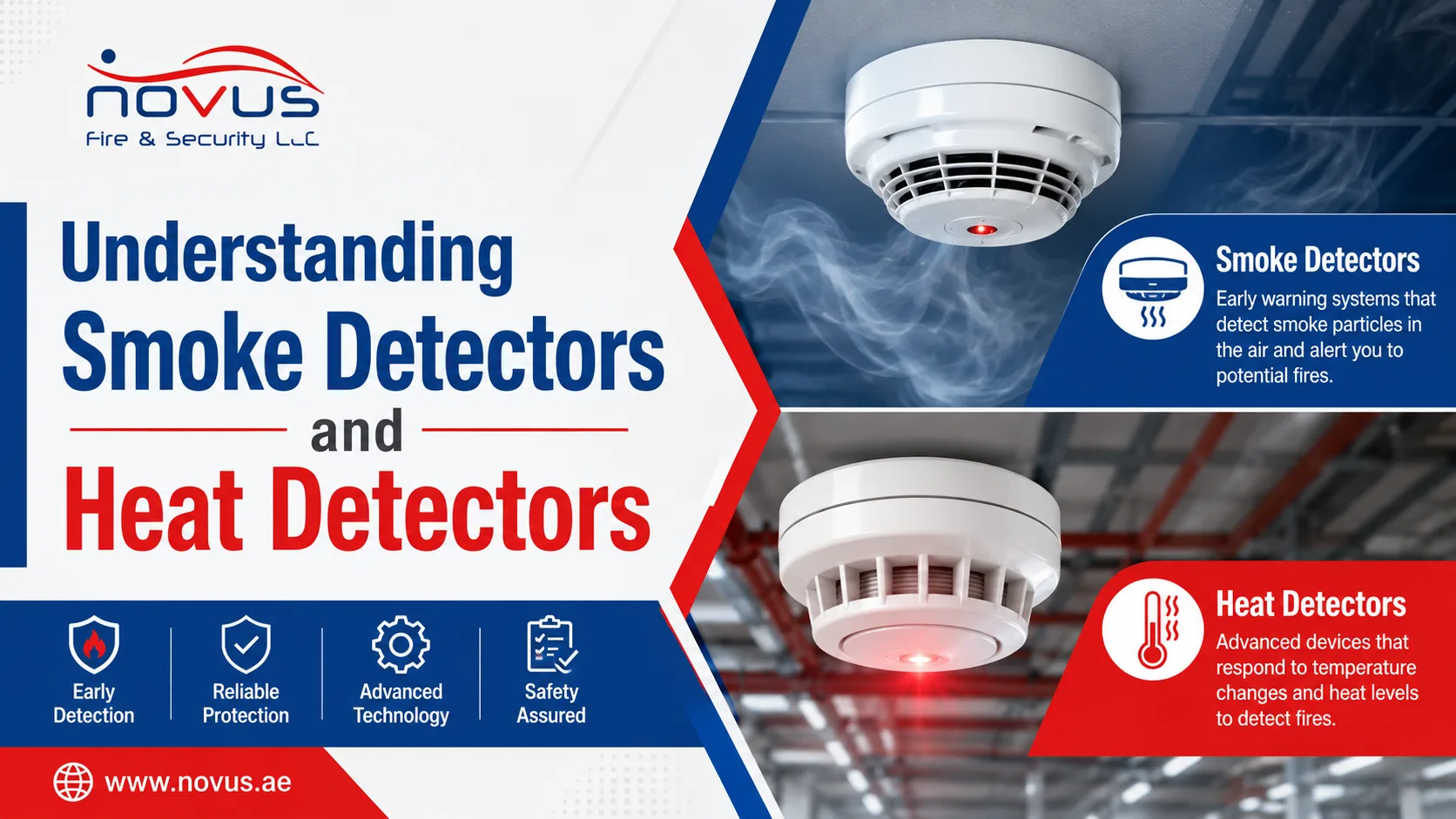
Although both devices detect fire, they work differently.
Smoke Detectors
Smoke detectors identify airborne smoke particles before temperatures rise significantly. They are ideal for:
- Offices
- Control rooms
- Server rooms
- Electrical rooms
- Administrative buildings
- Warehouses with clean environments
Smoke detection offers the earliest warning in most fire situations.
Heat Detectors
A heat detector alarm in Egypt activates when the surrounding temperature reaches a predetermined level or increases rapidly.
Heat detectors are commonly used in the following:
- Boiler rooms
- Generator rooms
- Commercial kitchens
- Dusty warehouses
- Manufacturing plants
- Mechanical workshops
These environments may generate smoke, steam, or dust during normal operations, making heat detection more suitable.
Should You Choose a Smoke and Heat Detector Combination?
Many industrial facilities benefit from a smoke and heat detector combination because different areas present different fire risks.
Benefits include:
- Improved fire detection accuracy
- Reduced false alarms
- Better protection across multiple environments
- Faster emergency response
- Flexible installation options
Combining both technologies creates multiple layers of protection throughout the facility.
Planning Before Installation
Successful installation begins long before detectors are mounted. A professional fire detection plan should evaluate the following:
- Building layout
- Ceiling height
- Airflow
- Ventilation systems
- Production processes
- Storage materials
- Hazard classification
- Escape routes
- Electrical equipment
- Environmental conditions
Proper planning ensures every detector provides maximum coverage.
Best Installation Locations
Different industrial areas require different detection strategies.
Production Areas
Heat detectors often perform better because manufacturing processes may generate dust, steam, or smoke.
Warehouses
Smoke detectors provide early warning in clean storage environments, while heat detectors are better suited for dusty warehouses.
Electrical Rooms
Smoke detectors help identify overheating electrical components before flames develop.
Server Rooms
Early smoke detection is essential to protect valuable IT infrastructure.
Mechanical Equipment Rooms
Heat detectors are generally preferred due to elevated operating temperatures.
Factors That Affect Detector Performance
Several environmental conditions influence detector effectiveness.
Ceiling Height
Higher ceilings may require specialized detector spacing.
Air Movement
HVAC systems can delay smoke from reaching detectors.
Dust
Heavy dust accumulation may trigger false alarms or reduce sensitivity.
Humidity
Moisture can affect detector operation if unsuitable devices are selected.
Temperature
Extreme temperatures influence detector selection and placement. Professional system design helps overcome these challenges.
Choosing the Right Heat Smoke Alarm in Egypt
Find the Right Smoke & Heat Detector for Your Facility
Selecting the appropriate heat smoke alarm in Egypt depends on your facility, not on simply purchasing the most expensive detector.
Consider:
- Building size
- Industrial activity
- Fire hazards
- Environmental conditions
- Detection speed
- Integration with fire alarm panels
- Maintenance requirements
- Long-term reliability
A tailored solution always delivers better protection than a one-size-fits-all approach.
Advantages of Solo Smoke Heat Detectors
Many fire safety professionals use equipment compatible with solo smoke and heat detectors in Egypt for testing methods for routine inspection and maintenance.
Advantages include:
- Faster detector testing
- Safe maintenance procedures
- Improved inspection efficiency
- Reduced downtime
- Reliable detector performance verification
Regular testing helps ensure every detector remains operational throughout its service life.
Importance of Regular Maintenance
Installation is only the beginning.
Routine maintenance should include the following:
- Visual inspection
- Functional testing
- Cleaning detectors
- Battery checks (where applicable)
- Wiring inspection
- Sensitivity testing
- Alarm verification
- System documentation
Regular servicing reduces the likelihood of detector failure during emergencies.
Common Installation Mistakes
Avoid these frequent errors:
- Installing detectors too close to ventilation ducts
- Using smoke detectors in excessively dusty areas
- Ignoring ceiling height recommendations
- Blocking detector airflow
- Skipping routine maintenance
- Incorrect detector spacing
- Poor cable routing
- Failing to perform commissioning tests
Correct installation significantly improves detection performance.
Benefits of Professional Installation
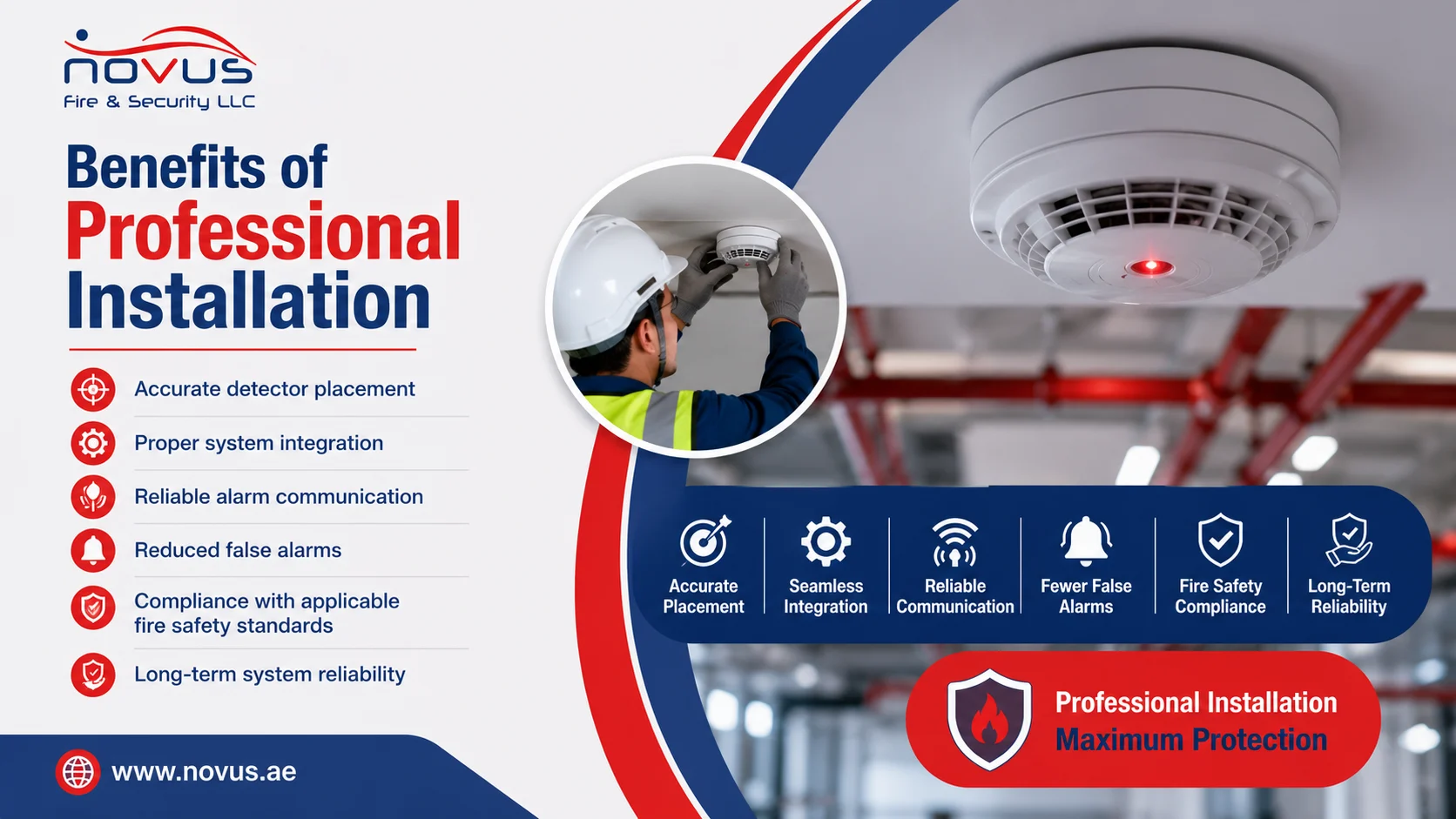
Professional installation ensures:
- Accurate detector placement
- Proper system integration
- Reliable alarm communication
- Reduced false alarms
- Compliance with applicable fire safety standards
- Long-term system reliability
Experienced fire protection specialists can also recommend upgrades as your facility expands. Novus Fire and Security LLC provides fire detection solutions designed for industrial, commercial, and high-risk environments, helping businesses implement dependable fire protection systems that align with operational requirements.
Conclusion
Every industrial facility has unique fire risks, making detector selection and installation a critical safety decision. Choosing the right combination of smoke and heat detection, installing devices in appropriate locations, and maintaining the system regularly can significantly improve fire response and reduce potential losses. Whether you manage a warehouse, manufacturing facility, logistics center, or processing plant, investing in a professionally designed detection system enhances workplace safety and operational resilience.
Working with experienced providers such as Novus Fire and Security LLC can help ensure your fire detection system is designed, installed, and maintained for dependable long-term performance.
Frequently Asked Questions
Q1. What is the best smoke heat detector in Egypt for industrial facilities?
A1. The best solution depends on the building environment, fire risks, ceiling height, and industrial processes. Many facilities use a combination of smoke and heat detectors for comprehensive protection.
Q2. Can a smoke and heat detector combination improve fire safety?
A2. Yes. A combination system provides earlier detection across different environments while reducing false alarms in challenging industrial areas.
Q3. Where should heat detectors be installed?
A3. Heat detectors are commonly installed in boiler rooms, mechanical rooms, workshops, commercial kitchens, generator rooms, and dusty manufacturing environments where smoke detectors may not perform effectively.
Q4. How often should industrial smoke and heat detectors be tested?
A4. Most facilities should perform routine inspections and scheduled functional testing according to the manufacturer’s recommendations and applicable fire safety regulations.
Q5. What is the difference between a smoke detector and a heat detector?
A5. A smoke detector senses smoke particles during the early stages of a fire, while a heat detector activates when the surrounding temperature reaches a preset threshold or rises rapidly. Many industrial facilities use both for complete fire detection coverage.