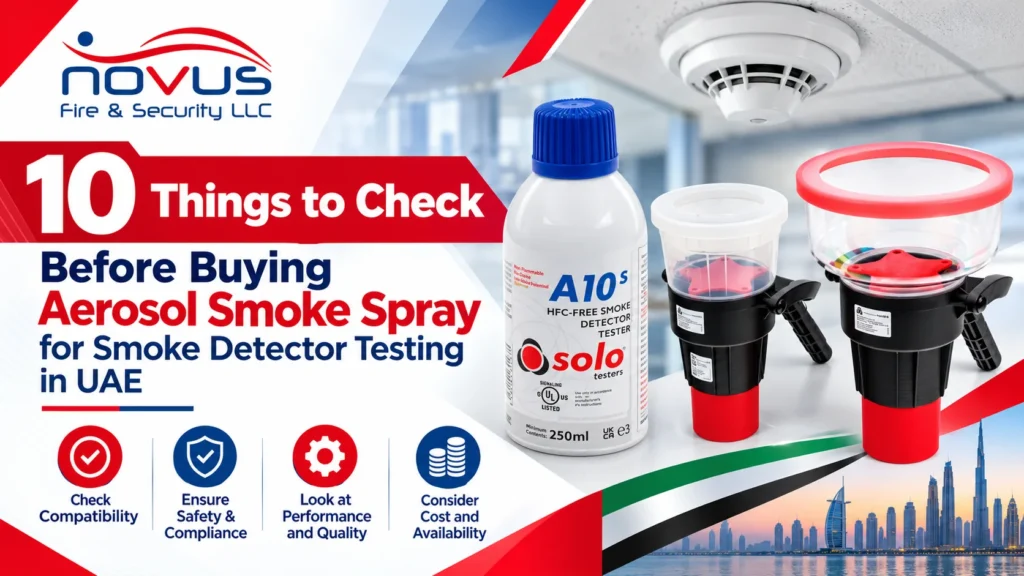
10 Things to Check Before Buying Aerosol Smoke Spray for Smoke Detector Testing in UAE
September 2, 2026
How to Choose the Right Solo Testing Equipment for Smoke Detector Maintenance
September 12, 2026Smoke detectors are a critical part of fire detection systems, but simply installing them is not enough. Regular functional testing helps confirm that compatible detectors respond as expected and remain ready to perform their intended role. Choosing the right testing product is therefore important for fire safety technicians, facility managers, maintenance contractors, and building owners.
A professional Aerosol Smoke Spray can provide a controlled smoke stimulus for functional testing when used with compatible detectors and testing equipment. However, different sites can have different requirements. A small office with standard ceiling-mounted detectors may need a different testing setup from a warehouse with high ceilings or a facility using multi-sensor detectors.
When selecting a smoke detector tester aerosol spray, it’s important to consider detector type, testing equipment, accessibility, testing frequency, residue, storage, and manufacturer recommendations. The right product should support effective testing without unnecessarily complicating maintenance.
How Do You Choose the Right Smoke Detector Test Aerosol?
Choose a Smoke Detector Test Aerosol based on the detector type, manufacturer’s recommendations, testing equipment, application environment, accessibility, and product characteristics.
Before purchasing, check:
- The type of smoke detector being tested
- Compatibility with the testing aerosol
- Compatibility with the detector tester or dispenser
- Whether a testing pole is required
- Product residue and contamination characteristics
- Testing frequency and quantity required
- Storage and handling requirements
- Manufacturer documentation
- Product quality and reliability
- Supplier technical support
For routine smoke detector testing, a suitable aerosol smoke test spray should provide an appropriate and consistent testing stimulus when used according to the manufacturer’s instructions.
1. Identify the Type of Smoke Detector
The first step is identifying exactly which detectors you need to test. Different fire alarm systems can contain different detector technologies, including:
- Optical or photoelectric smoke detectors
- Ionisation smoke detectors
- Multi-sensor detectors
- Combination detectors
- Other specialised detection devices
Not every detector should be tested with the same assumptions. Always consult the detector manufacturer’s documentation to determine the appropriate functional testing method. Knowing your detector type will help you select a compatible Smoke Detector Testing Spray and testing system.
2. Check Manufacturer Compatibility
Compatibility should be one of the first things you verify before purchasing any testing aerosol. A professional Aerosol Smoke Detector Tester is intended to be used as part of a testing process, but the specific product must still be appropriate for the detector and testing equipment.
Check:
- Detector manufacturer
- Detector model
- Recommended testing method
- Aerosol compatibility
- Tester/dispenser compatibility
- Manufacturer instructions
For example, professional Solo aerosol products are designed for use with compatible Solo detector testers and dispensers. Avoid assuming that an aerosol is suitable simply because it is marketed as a smoke detector testing product.
3. Consider Your Testing Equipment
The aerosol and the tester work together. Before ordering a smoke detector tester aerosol spray, check which dispenser or detector tester your technicians already use.
Important considerations include:
- Tester model
- Aerosol can dimensions
- Dispenser compatibility
- Tester head
- Extension pole
- Required adapters
- Replacement parts
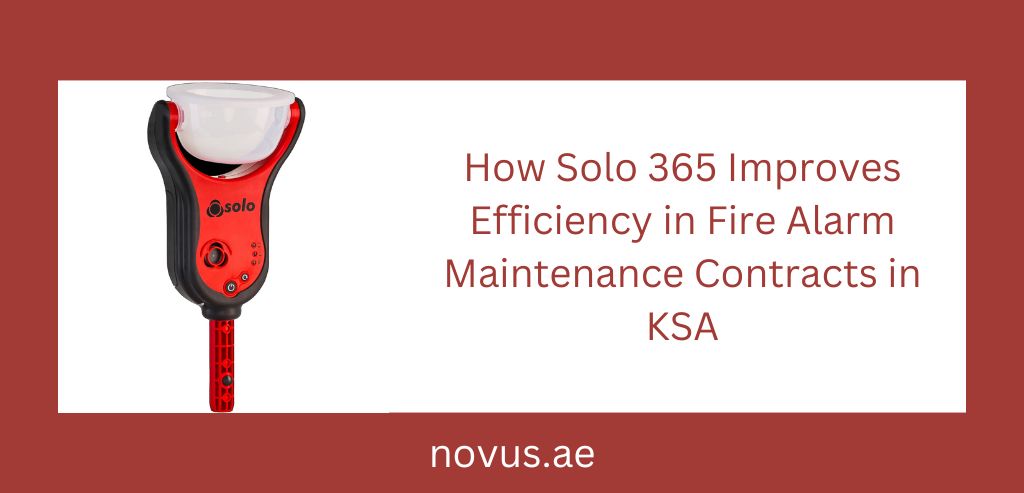
For example, Solo 330 and Solo 332 dispensers are designed for use with compatible Solo smoke aerosol products. Choosing a compatible combination can make testing more efficient and reduce the risk of purchasing equipment that cannot be used together.
4. Think About Detector Accessibility
The height and location of your detectors can affect the testing setup you need. Standard office detectors may be easy to reach, while detectors installed in warehouses, factories, atriums, or high-ceiling areas may require access poles.
Before selecting a Smoke Test Spray for Fire Alarms, consider:
- Ceiling height
- Detector location
- Accessibility
- Testing pole requirements
- Number of detectors
- Technician safety
A suitable testing system should allow technicians to perform functional checks without unnecessarily exposing them to difficult working conditions. For high-level detectors, compatible pole-based testing equipment can allow testing from ground level.
5. Evaluate Residue and Contamination
One of the biggest practical considerations when choosing a Smoke Detector Test Aerosol is what the product leaves behind. A suitable testing aerosol should provide the required stimulus while limiting unnecessary contamination when used correctly.
Ask the supplier or manufacturer about:
- Residue
- Cleaning requirements
- Detector contamination
- Formula characteristics
- Recommended application
Some professional testing aerosols are formulated to reduce residue and make routine maintenance more convenient. This can be particularly important when technicians test large numbers of detectors regularly.
6. Match the Product to Your Testing Frequency
Your testing schedule should influence how much aerosol you purchase and how you manage your stock. A small facility may only require occasional detector testing, while a large commercial property or fire safety contractor may test hundreds or thousands of detectors.
Consider:
- Number of detectors
- Testing frequency
- Number of buildings
- Average aerosol consumption
- Number of technicians
- Required stock levels
Buying an appropriate quantity can help prevent unnecessary shortages while avoiding excessive inventory. For contractors, it can be useful to calculate approximate aerosol consumption per inspection program before placing a larger order.
7. Consider Multi-Sensor Detector Requirements
Not every fire detection system relies on a conventional smoke detector. Some facilities use multi-sensor or multi-criterion detectors that combine different sensing technologies. For these systems, a standard smoke test may not be sufficient to evaluate every sensing function. Depending on the detector design, specialised testing equipment may be available for testing multiple criteria.
For example, professional multi-criterion testers can combine smoke and heat testing functions for compatible detectors. If your facility uses multi-sensor detectors, check the manufacturer’s recommended testing procedure before choosing an aerosol-only solution.
8. Review Storage and Safety Information
Aerosol cans are pressurised containers, so proper storage and handling are important.
Before purchasing, review the manufacturer’s safety information for:
- Storage temperature
- Heat exposure
- Transportation
- Handling
- Disposal
- Personal protective measures
For example, safety documentation for Solo aerosol products warns that the pressurised container may burst if heated. Store testing aerosols according to the manufacturer’s instructions and applicable workplace safety requirements. Never leave pressurised aerosol products in unsuitable environments or expose them to excessive heat.
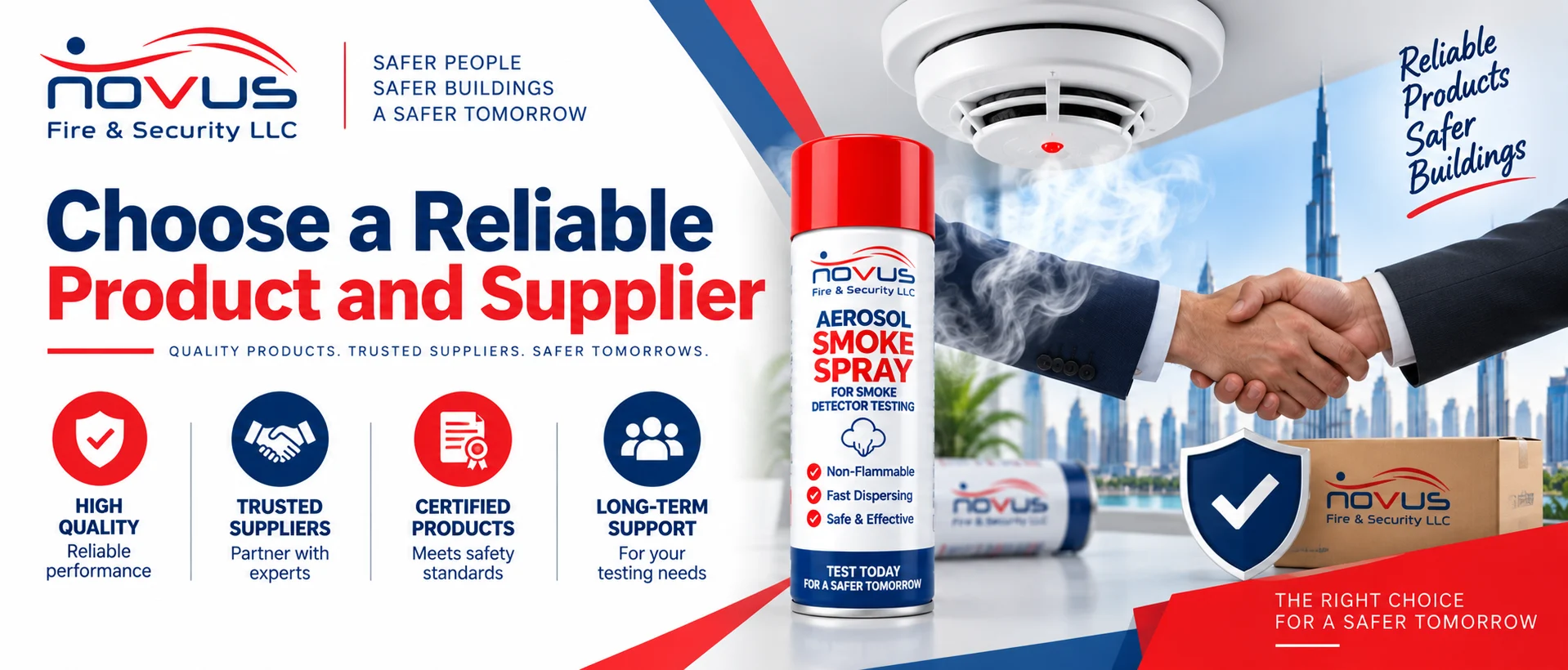
9. Choose a Reliable Product and Supplier
The supplier you purchase from matters, particularly when your business relies on testing equipment for routine maintenance contracts.
When comparing suppliers, look for:
- Genuine products
- Clear product specifications
- Manufacturer information
- Safety documentation
- Compatibility guidance
- Product availability
- Technical support
- After-sales assistance
Novus Fire and Security LLC provides professional smoke detector testing equipment and aerosol products in the UAE, including Solo smoke detector testers and compatible testing aerosols. A knowledgeable supplier can help you identify the right testing product based on your detector type and existing equipment.
10. Compare Total Value, Not Just Price
The cheapest Aerosol Smoke Spray isn’t necessarily the most economical option. Consider the complete value of the product, including:
- Cost per can
- Number of tests
- Product efficiency
- Residue
- Equipment compatibility
- Storage requirements
- Availability
- Technician productivity
A slightly higher-priced professional product may provide better overall value if it is compatible with your equipment, performs consistently, and reduces unnecessary maintenance issues. The goal should be reliable testing rather than simply minimizing the purchase price.
Choosing the Right Aerosol for Different Testing Requirements
Different environments can require different approaches.
| Testing Requirement | Important Considerations |
|---|---|
| Small office | Standard detector compatibility |
| Large commercial building | Quantity and testing efficiency |
| High ceilings | Tester pole and accessibility |
| Warehouse | Detector location and access |
| Multi-sensor system | Manufacturer-specific testing requirements |
| Frequent contractor testing | Product consumption and stock |
| Routine maintenance | Residue and ease of use |
| Multiple detector brands | Compatibility across models |
This comparison can help maintenance teams determine what to investigate before purchasing.
How to Use Smoke Detector Testing Products Responsibly
A testing aerosol should be used according to the product instructions and the detector manufacturer’s recommended testing procedure. Technicians should avoid excessive application simply to trigger an alarm. The objective is to perform an appropriate functional check, not expose the detector to unnecessary amounts of test aerosol.
Request a Quick Quote
Testing should also form part of a broader inspection and maintenance program rather than being treated as the only indicator of system condition. If a detector fails to respond correctly, the appropriate next step should follow the manufacturer’s maintenance procedures and applicable fire safety requirements.
Final Thoughts
Choosing the right smoke detector test aerosol depends on more than selecting a product labelled for fire alarm testing. You need to consider the detector technology, testing equipment, accessibility, testing frequency, residue, storage, safety, and manufacturer recommendations. For standard applications, a suitable Smoke Detector Testing Spray can make functional detector checks more practical and consistent.
For specialised systems, such as multi-sensor detectors, additional or different testing methods may be necessary. Before purchasing, identify exactly what your technicians need to test and confirm that the selected aerosol and testing equipment are compatible. This approach can help you avoid unnecessary purchases and support a more organised fire alarm maintenance program.
FAQs
Q1. What is a Smoke Detector Test Aerosol?
A1. A Smoke Detector Test Aerosol is a product designed to provide a controlled smoke stimulus for functional testing of compatible smoke detectors.
Q2. How do I choose the right smoke detector tester aerosol spray?
A2. Check your detector type, model, manufacturer’s recommended testing method, tester compatibility, residue characteristics, accessibility requirements, and product documentation.
Q3. Is aerosol smoke test spray suitable for every smoke detector?
A3. No. Compatibility depends on the detector design, manufacturer, testing equipment, and product specifications. Always follow the detector manufacturer’s instructions.
Q4. What is Smoke Detector Testing Spray used for?
A4. Smoke Detector Testing Spray is used to provide a testing stimulus that helps technicians check the functional response of compatible smoke detectors.
Q5. Can an Aerosol Smoke Detector Tester be used with a testing pole?
A5. Some detector tester systems are designed to work with extension poles, allowing technicians to test accessible ceiling-mounted detectors from ground level. Confirm compatibility before use.
Q6. What should I check before buying Smoke Test Spray for Fire Alarms?
A6. Check detector compatibility, tester compatibility, residue characteristics, product documentation, storage requirements, quantity, manufacturer recommendations, and supplier support.
Q7. Is a low-residue Smoke Detector Test Aerosol better?
A7. A low-residue formulation can be advantageous because it may reduce contamination and cleaning requirements. However, compatibility and manufacturer recommendations should remain the priority.