
How IoT is Transforming Smoke Detector Testing and Monitoring
April 15, 2026
Step-by-Step Guide to Fire Hydrant Flow Testing Using Hose Monster
April 15, 2026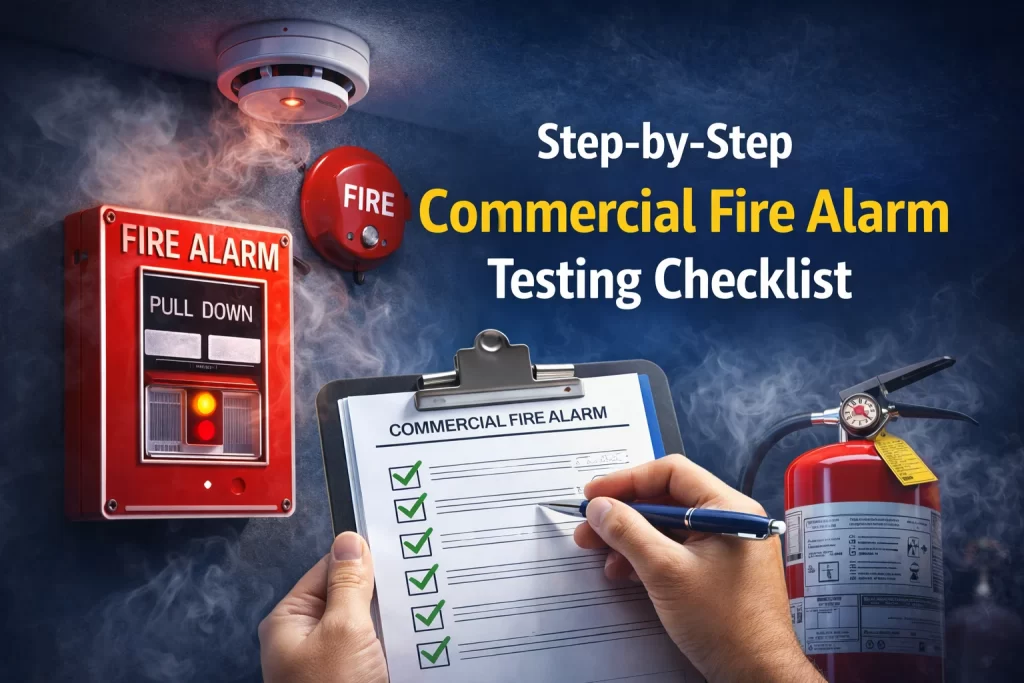
Fire safety is a non-negotiable requirement for any commercial building. Whether it’s an office, warehouse, hospital, or retail space, ensuring that your fire alarm system is functioning correctly can save lives and protect assets. A well-structured fire alarm testing routine not only helps detect faults early but also ensures compliance with safety regulations and standards.
This comprehensive guide outlines a step-by-step commercial fire alarm testing checklist, helping facility managers, technicians, and business owners maintain a reliable and efficient system.
Why Fire Alarm Testing is Important
Regular Fire Alarm Testing ensures that all components of your system are working as intended. Over time, detectors can accumulate dust, wiring may degrade, and batteries can weaken. Without proper inspection, these issues may go unnoticed until an emergency occurs.
Routine fire alarm system testing helps the following:
- Identify faults before they become critical
- Ensure compliance with fire safety regulations
- Maintain system reliability
- Reduce false alarms
- Protect lives and property
Additionally, scheduled smoke alarm testing and proper maintenance of fire alarm system practices ensure that your system remains responsive at all times.
Step 1: Review Fire Safety Requirements and Documentation
Before beginning any fire alarm check service, it’s important to review your building’s fire safety plan, system layout, and previous inspection records. This step ensures that testing aligns with regulatory requirements and manufacturer guidelines.
Check for:
- Fire alarm system design and zones
- Device locations
- Previous maintenance logs
- Compliance certificates
Having this information helps streamline the testing process and ensures no component is overlooked.
Step 2: Notify Occupants and Authorities
Fire alarm testing can trigger alarms and alerts, which may cause panic if not communicated properly. Inform building occupants, staff, and relevant authorities before starting the testing process.
Key actions:
- Notify employees and tenants
- Inform monitoring agencies
- Disable automatic emergency responses temporarily (if required)
This step ensures a smooth and disruption-free testing process.
Step 3: Perform Visual Inspection of Components
A thorough visual inspection is a critical part of fire alarm system testing. Look for any visible damage, obstructions, or signs of wear and tear.
Inspect:
- Smoke detectors and heat detectors
- Control panels
- Manual call points
- Wiring and connections
- Alarm sounders and strobes
Ensure that all devices are clean, accessible, and properly installed.
Step 4: Test the Fire Alarm Control Panel
The fire alarm control panel is the central hub of your system. During fire alarm testing, verify that the panel is functioning correctly and displaying accurate information.
Check:
- Power supply and backup battery
- Indicator lights and display messages
- Fault signals and system logs
Any irregularities should be addressed immediately to maintain system reliability.
Step 5: Conduct Smoke and Heat Detector Testing
Smoke alarm testing is one of the most important steps in the checklist. Each detector should be tested to ensure it responds correctly to simulated fire conditions.
Testing methods include:
- Using approved smoke simulation tools
- Heat testing for heat detectors
- Functional testing for sensor sensitivity
Make sure each detector activates the alarm and sends a signal to the control panel.
Step 6: Test Manual Call Points
Manual call points allow occupants to trigger the fire alarm system in case of an emergency. These devices must be tested regularly to ensure they are operational.
Steps:
- Activate each call point using a test key.
- Confirm alarm activation
- Reset the device after testing
This ensures that occupants can rely on manual activation during emergencies.
Step 7: Check Alarm Sounders and Visual Indicators
Alarm sounders and visual indicators play a crucial role in alerting occupants. During fire alarm system testing, ensure that all alarms are clearly audible and visible.
Verify:
- Sound levels meet safety standards
- Strobe lights are functioning properly.
- Coverage is adequate across all areas.
This step ensures that alarms effectively alert everyone in the building.
Step 8: Test Communication Systems
Modern fire alarm systems are often connected to monitoring centers or emergency services. Testing these communication links is essential.
Check:
- Signal transmission to monitoring stations
- Integration with other safety systems
- Response time of alerts
Reliable communication ensures a quick response during emergencies.
Step 9: Inspect Backup Power Supply
Power failures can occur at any time, making backup systems critical. During maintenance, fire alarm system checks, verify that backup batteries and power supplies are functioning correctly.
Inspect:
- Battery condition and charge levels
- Automatic switchover functionality
- Power supply connections
A reliable backup system ensures uninterrupted operation during emergencies.
Step 10: Document Results and Address Issues
Proper documentation is a key part of any fire alarm check service. Record all test results, including any faults or maintenance actions taken.
Include:
- Date and time of testing
- Devices tested
- Issues identified
- Repairs or replacements performed
This documentation is essential for compliance and future reference.
Step 11: Schedule Regular Maintenance and Testing
Fire alarm testing is not a one-time task. Regular inspections and maintenance are required to ensure ongoing reliability.
Recommended schedule:
- Weekly or monthly basic checks
- Quarterly inspections
- Annual professional testing
Working with a reliable fire alarm testing company ensures that your system remains compliant and fully operational.
Ask your query?
Common Challenges in Fire Alarm Testing
While testing is essential, it can come with challenges such as:
- Accessing hard-to-reach detectors
- Minimizing disruption to operations
- Ensuring compliance with evolving regulations
These challenges highlight the importance of professional expertise and proper planning.
The Role of Professional Fire Alarm Testing Services
Hiring a professional fire alarm testing company can significantly improve the efficiency and accuracy of testing. Experts have the tools, knowledge, and experience to conduct thorough inspections and identify potential issues. Companies like Novus Fire and Security LLC provide comprehensive fire alarm check service solutions, ensuring that systems meet all safety standards and operate reliably.
Conclusion
A step-by-step commercial fire alarm testing checklist is essential for maintaining safety, compliance, and system performance. From visual inspections to functional testing and documentation, each step plays a critical role in ensuring that your fire alarm system is ready to respond in an emergency. By following a structured approach and incorporating regular smoke alarm testing and maintenance fire alarm system practices, businesses can significantly reduce risks and enhance safety. Partnering with experts like Novus Fire and Security LLC further ensures that your fire alarm system testing is carried out efficiently and professionally.
FAQs
Q1: What is fire alarm testing?
A1: Fire alarm testing is the process of inspecting and verifying that all components of a fire alarm system are functioning correctly and responding to emergencies.
Q2: How often should fire alarm system testing be performed?
A2: It depends on regulations, but most systems require weekly, monthly, and annual testing to ensure compliance and reliability.
Q3: Why is smoke alarm testing important?
A3: Smoke alarm testing ensures that detectors respond quickly to smoke, helping prevent fire-related damage and protecting occupants.
Q4: Should I hire a fire alarm testing company?
A4: Yes, a professional fire alarm testing company ensures accurate testing, compliance with regulations, and proper maintenance of your system.