
Top Industries in Saudi Arabia That Need Solo 461 Heat Detector Testing
March 19, 2026
Step-by-Step Commercial Fire Alarm Testing Checklist
April 15, 2026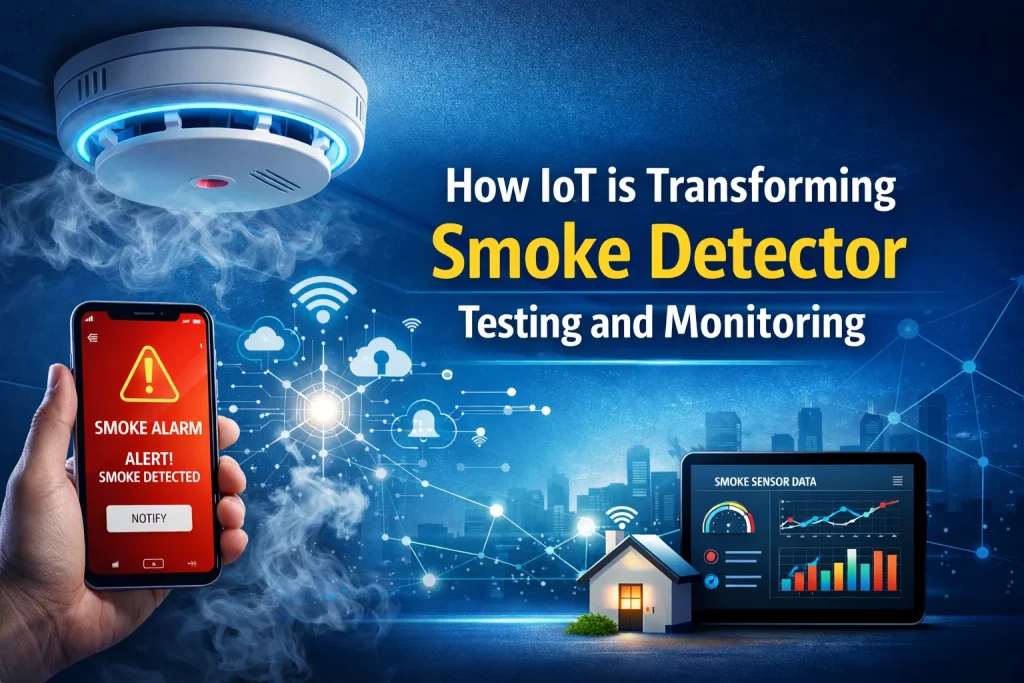
Fire safety has always relied on reliability, speed, and accuracy. Even though traditional methods for testing smoke detectors work, they often require manual inspection, physical access, and regular checks, which can leave gaps. With the rise of the Internet of Things (IoT), the landscape of fire safety is rapidly evolving. IoT-enabled smoke detection systems are bringing smarter, faster, and more efficient ways to test, monitor, and maintain fire alarms, reducing risks and improving compliance across residential, commercial, and industrial environments.
Understanding IoT in Fire Safety
IoT refers to a network of interconnected devices that communicate and exchange data in real time. In fire safety, IoT integrates sensors, cloud platforms, and monitoring systems to create an intelligent ecosystem where smoke detectors can self-monitor, report issues, and even predict failures before they happen.
Instead of relying solely on manual checks using tools like a smoke detector tester spray or a smoke alarm test spray, IoT systems continuously track the performance and status of each device. This ensures that fire alarm systems are always operational and ready to respond in emergencies.
The Shift from Manual to Smart Testing
Traditional testing methods involve technicians physically visiting each detector and using a fire alarm smoke tester to simulate smoke conditions. While effective, this approach has limitations:
- Time-consuming for large facilities
- Prone to human error
- Limited frequency of testing
- Higher maintenance costs
IoT-enabled systems eliminate many of these challenges. Sensors embedded within detectors can perform self-diagnostics and send alerts if any component malfunctions. This reduces the dependency on manual processes and ensures continuous monitoring. However, physical testing still plays a role. Tools used to test smoke detectors remain essential for compliance checks and validation, but IoT enhances the overall efficiency by reducing how often manual intervention is required.
Real-Time Monitoring and Alerts
One of the major advantages of IoT in smoke detection is real-time monitoring. Connected smoke detectors can instantly send alerts to building managers, maintenance teams, or emergency services when smoke is detected or when the device experiences a fault.
This real-time communication offers several benefits:
- Immediate response to fire incidents
- Faster identification of faulty detectors
- Reduced downtime of safety systems
- Enhanced occupant safety
For example, if a detector fails or becomes less sensitive, the system can notify technicians before it becomes a critical issue. This proactive approach significantly improves safety standards.
Predictive Maintenance and Reduced Costs
IoT technology enables predictive maintenance by analyzing data trends from smoke detectors. Instead of waiting for a device to fail, the system can predict when maintenance is needed based on usage patterns, environmental conditions, and sensor performance.
This approach helps:
- Reduce unexpected failures
- Optimize maintenance schedules
- Lower operational costs
- Extend the lifespan of devices
In traditional setups, technicians rely on periodic inspections using a smoke alarm test spray. IoT transforms maintenance into a data-driven process, guaranteeing efficient resource utilization only when necessary.
Remote Testing Capabilities
IoT allows remote testing of smoke detectors, which is particularly beneficial for large buildings, multi-site operations, and hard-to-access areas. Technicians can initiate tests, monitor results, and verify system performance from a centralized dashboard. This reduces the need for physical presence while maintaining high testing standards. However, manual tools like a spray for testing smoke detectors are still used for regulatory compliance and final verification.
Integration with Smart Building Systems
Modern buildings are increasingly adopting smart technologies, and IoT-enabled smoke detectors seamlessly integrate with these systems. They can connect with:
- HVAC systems to control airflow during a fire
- Security systems for coordinated emergency response
- Building management systems for centralized control
This integration creates a unified safety ecosystem where all components work together to minimize risks and enhance response efficiency.
Enhanced Data Collection and Reporting
IoT systems collect vast amounts of data from smoke detectors, including:
- Sensitivity levels
- Battery status
- Environmental conditions
- Testing history
This data can be analyzed to generate detailed reports, helping organizations meet compliance requirements and improve safety strategies. Instead of manually documenting tests conducted with a smoke tester for fire alarms, reports are automatically generated and stored in the cloud.
Improved Compliance and Audit Readiness
Fire safety regulations require regular testing and documentation. IoT simplifies compliance by automating record-keeping and ensuring that all detectors are consistently tested and monitored. Auditors can access detailed logs showing when and how detectors were tested, whether through automated systems or manual methods like testing smoke detectors. This transparency reduces the risk of non-compliance and penalties.
Challenges of IoT in Smoke Detection
While IoT offers numerous benefits, there are some challenges to consider:
- Initial setup costs
- Cybersecurity concerns
- Dependence on network connectivity
- Need for skilled personnel
To fully benefit from this technology, organizations must ensure that their IoT systems are secure and reliable.
The Role of Traditional Testing Tools in an IoT World
Even with advanced IoT systems, traditional tools remain relevant. Widely used products, including smoke detector tester spray and smoke alarm test spray, serve the following purposes:
- Regulatory compliance
- Physical verification of detector functionality
- Training and demonstration purposes
IoT does not replace these tools but complements them, creating a hybrid approach that combines manual and automated testing for maximum effectiveness.
Future Trends in IoT-Based Fire Safety
The future of smoke detector testing and monitoring is set to become even more advanced with innovations such as the following:
- AI-powered analytics for smarter predictions
- Wireless interconnected detector networks
- Cloud-based centralized monitoring platforms
- Integration with emergency response systems
These advancements will further enhance the reliability and efficiency of fire safety systems. Companies like Novus Fire and Security LLC are already aligning with these advancements by adopting modern technologies to improve fire safety solutions. Their approach reflects the growing importance of integrating IoT with traditional safety practices.
Conclusion
IoT is transforming smoke detector testing and monitoring by introducing real-time insights, predictive maintenance, and remote capabilities. While traditional methods like using a fire alarm smoke tester or tools to test smoke detectors remain important, IoT enhances these processes by making them smarter and more efficient.
As technology continues to evolve, the combination of IoT and conventional testing methods will set new standards in fire safety. Organizations that adopt these innovations will improve compliance and ensure a safer environment for occupants. Novus Fire and Security LLC continues to support this transformation by embracing advanced fire safety technologies while maintaining the reliability of proven testing methods.