
Fire Safety Compliance Tips Using Smoke Detector Tester & Testing Equipment
April 22, 2026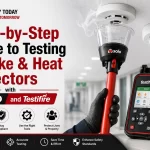
Step-by-Step Guide to Testing Smoke & Heat Detectors with SOLO and Testifire
April 29, 2026Setting up the Testifire 1001 smoke detector tester correctly is essential for accurate fire detection system testing and safety compliance. While many technicians follow standard instructions, real-world conditions often introduce challenges that can affect results. Improper setup can lead to delayed detector response, false alarms, or even damage to the system.
In this detailed guide, we’ll walk you through the complete setup process of the Testifire 1001, one of the most reliable multi criterion testers used in the fire safety industry. Along with step-by-step instructions, you’ll find real technician scenarios, practical tips, and safety precautions to ensure consistent and accurate testing.
What is Testifire 1001 and Why It Matters
The Testifire 1001 is a professional-grade smoke detector testing device designed to simulate smoke conditions safely. As part of the advanced range of multi-criterion testers, it enables technicians to test detectors efficiently without using harmful aerosols or external tools. Unlike traditional testing methods, Testifire provides controlled smoke delivery, making it ideal for commercial buildings, warehouses, and high-rise facilities where precision and reliability are critical.
Components You Need Before Setup
Before starting the setup process, make sure all required components are ready:
- Testifire 1001 unit
- Smoke capsule (compatible with Testifire)
- Rechargeable battery pack
- Access pole for ceiling-mounted detectors
- Carry case for safe handling
👉 Always check your smoke capsule before heading to the site. Many delays happen simply because the capsule is empty or improperly installed.
Step-by-Step Setup Guide for Testifire 1001 Smoke Detector Tester
Step 1: Inspect the Equipment
Start with a thorough inspection:
- Check for any visible damage
- Ensure the battery is fully charged
- Verify the smoke capsule is intact
👉 During a mall inspection, a technician faced repeated test failures. The issue wasn’t the detector it was a partially drained battery in the Testifire unit.
Step 2: Install the Smoke Capsule
- Open the capsule compartment
- Insert the smoke capsule securely
- Close the chamber tightly
👉 Improper installation can lead to weak smoke output and inaccurate testing.
Step 3: Power On the Device
- Turn on Testifire 1001
- Wait for the indicator light to stabilize
- Confirm the device is ready for use
A steady light typically indicates readiness.
Step 4: Attach the Access Pole
- Connect the tester to the access pole
- Lock it firmly in place
This is essential for testing detectors installed on high ceilings.
Step 5: Position the Tester Correctly
- Place the tester directly over the detector.
- Ensure a proper seal around the detector head
👉 In a warehouse project, improper positioning caused smoke leakage, leading to delayed activation. Correct alignment resolved the issue instantly.
Step 6: Activate the Smoke Test
- Trigger the smoke release
- Hold the tester in place for 10–20 seconds.
The detector should activate within this time.
Step 7: Verify System Response
- Check if the alarm sounds
- Confirm the signal at the control panel
👉 This step ensures the entire fire detection system is working not just the detector.
Step 8: Reset the Detector
- Reset the system via control panel
- Confirm normal operation resumes
Real Technician Scenarios You Should Know
Scenario 1: High Ceiling Testing Challenge
In a commercial building, airflow from HVAC systems prevented proper smoke detection. The technician resolved it by adjusting the tester position and reducing airflow during testing.
Scenario 2: False Negative Results
A technician assumed a detector was faulty when it didn’t trigger. Later, it was discovered that the smoke capsule was nearly empty.
👉 Even the best multi-criterion testers require proper handling and awareness of real-world conditions.
Common Mistakes to Avoid
- Not sealing the tester properly
- Using a low or empty smoke capsule
- Holding the tester too far from the detector
- Skipping system response verification
- Overusing smoke (can leave residue)
Practical Tips for Better Testing Results
- Always carry extra smoke capsules
- Test detectors during low airflow conditions
- Use appropriate pole length for safe access
- Clean the tester regularly
- Follow manufacturer guidelines strictly
👉 These small practices can significantly improve accuracy and efficiency.
Safety Precautions During Testing
Safety should always be a priority when using multi-criterion testers like the Testifire 1001:
- Avoid direct inhalation of smoke
- Ensure proper ventilation
- Do not overuse smoke in confined spaces
- Handle equipment carefully to prevent damage
- Wear protective gear if required
Why Choose Testifire 1001 Over Other Multi-Criterion Testers?
- Controlled and safe smoke simulation
- High accuracy and reliability
- Easy setup and operation
- Ideal for commercial and industrial use
- Reduces testing errors and time
👉 It’s a preferred choice for professionals who need consistent results.
Conclusion
The Testifire 1001 smoke detector tester is one of the most reliable tools in the fire safety industry. However, its performance depends heavily on correct setup and usage. By following this complete guide, applying real-world insights, and avoiding common mistakes, technicians can ensure accurate testing and full compliance. Whether you’re working in residential, commercial, or industrial environments, mastering the use of multi criterion testers like Testifire 1001 will significantly improve your testing efficiency and safety standards.
FAQs
Q1: How long does the Testifire 1001 take to activate a detector?
A1: Typically within 10–20 seconds when properly positioned.
Q2: Can improper setup affect Testifire 1001 results?
A2: Yes, incorrect positioning or low capsule levels can lead to inaccurate or delayed results.
Q3: Is Testifire 1001 suitable for commercial buildings?
A3: Absolutely. It is widely used in commercial environments due to its precision and reliability.
Q4: How often should smoke detectors be tested using Testifire 1001?
Q4: Ideally every 3 to 6 months, depending on safety regulations.