Complete Setup Guide for Testifire 1001 Smoke Detector Tester
April 23, 2026
Top Technologies Used in Fire Alarm Testing Services in KSA
May 1, 2026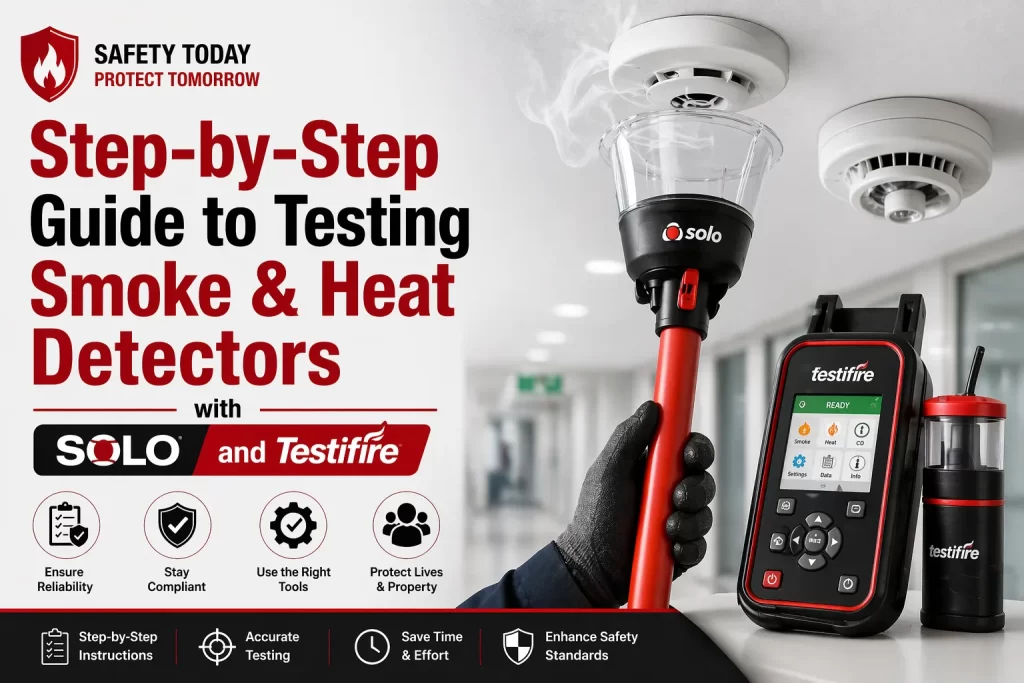
Proper smoke and heat detector testing is critical for fire safety compliance and system reliability. Many technicians follow basic steps, but incorrect testing methods can lead to false alarms, delayed response, or even detector damage. In this guide, we’ll walk through the exact step-by-step process of testing detectors using SOLO and Testifire, along with real-world tips, common mistakes, and expert insights.
Why Regular Detector Testing Matters
- Ensures early fire detection
- Prevents system failures
- Meets fire safety regulations
- Reduces false alarms
Tools Required for Testing
- SOLO smoke detector tester
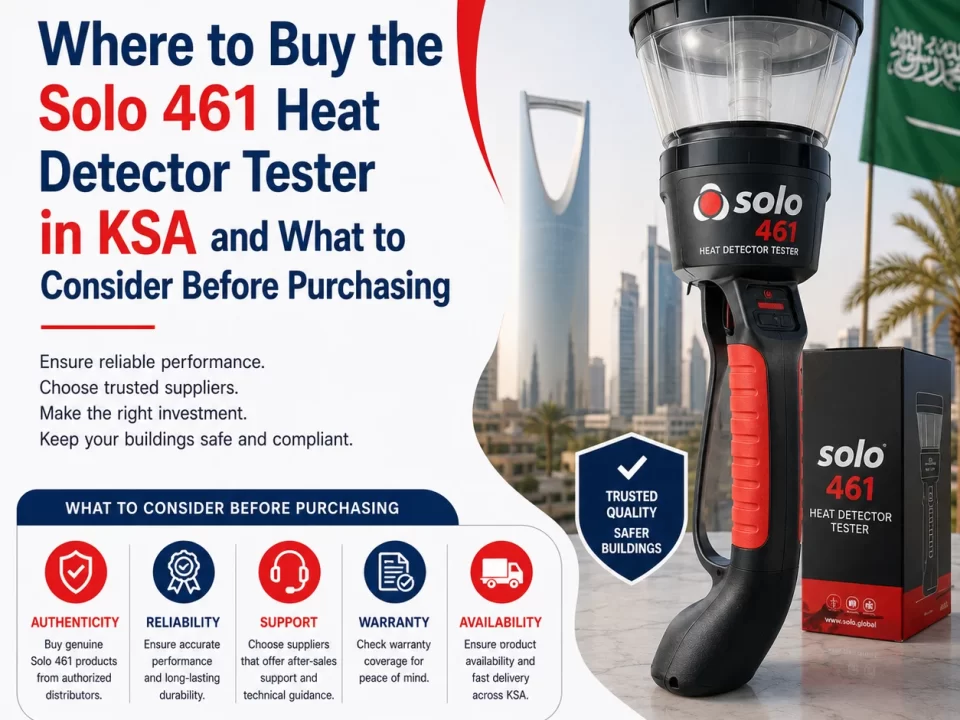
- SOLO 461 heat detector tester
- Testifire multi-functional tester
- Access poles for high ceilings
Step-by-Step Process to Test Smoke & Heat Detectors
Step 1: Visual Inspection
- Check for dust, damage, or blockage
- Ensure detector is properly installed
Step 2: Functional Testing (Smoke Detector)
- Use SOLO smoke spray or Testifire
- Spray from 1–2 inches distance
- Detector should trigger within 10–30 seconds
Step 3: Heat Detector Testing
- Use SOLO 461 or Testifire heat mode
- Apply controlled heat (avoid overheating)
- Alarm should activate within specified range
Step 4: Verify Alarm & System Response
- Check panel response
- Ensure signal is received correctly
Step 5: Reset the Detector
- Reset from control panel
- Confirm system returns to normal
Common Mistakes to Avoid
- Applying excessive heat (can damage sensor)
- Spraying too close (leaves residue)
- Skipping regular maintenance
- Using incorrect testing tools
SOLO vs Testifire – Which One Should You Use?
| Feature | SOLO Tester | Testifire Tester |
|---|---|---|
| Usage | Basic testing | Advanced multi-testing |
| Functions | Smoke or heat (separate) | Smoke + Heat + CO |
| Best For | Routine checks | Professional inspections |
👉 Use Testifire for high-accuracy and multi-detector environments, especially in commercial buildings.
Real-World Testing Scenario (Expert Insight)
During a commercial site inspection in a high-ceiling facility, technicians faced delayed smoke detection due to airflow interference. Using Testifire, they achieved accurate results by controlling the test environment and positioning the tester correctly.
👉 Lesson: Environment matters as much as the testing tool
Conclusion
Accurate smoke and heat detector testing requires the right tools, proper technique, and real-world awareness. By using SOLO and Testifire correctly, you can ensure reliable performance, safety compliance, and long-term system efficiency.
FAQs
Q1: How long should a smoke detector take to respond during testing?
A1: A properly functioning smoke detector should respond within 10 to 30 seconds when tested using approved tools like SOLO or Testifire.
Q2: Can testing damage smoke or heat detectors?
A2: Yes, detectors can be damaged if excessive heat is applied or if the testing spray is used too closely. Always follow recommended testing guidelines.
Q3: What is better: SOLO or Testifire for detector testing?
A3: Testifire is better for advanced, multi-functional testing (smoke, heat, CO), while SOLO is ideal for basic and routine detector testing.