
How to Ensure NFPA Compliance in Fire Flow Testing
April 15, 2026Complete Setup Guide for Testifire 1001 Smoke Detector Tester
April 23, 2026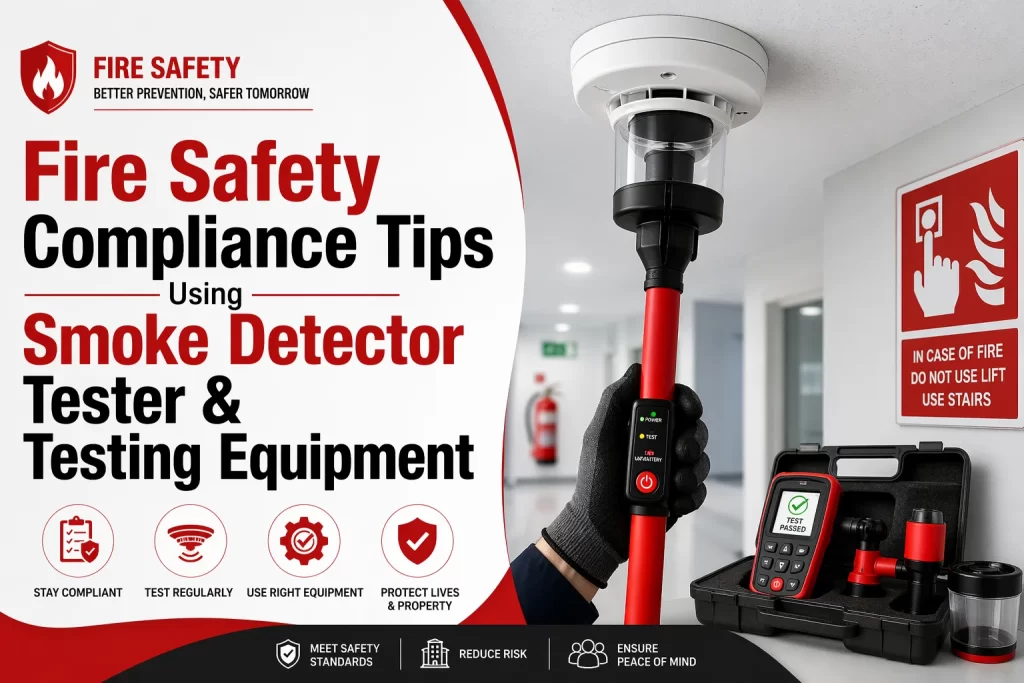
Fire safety compliance is not just a legal requirement it’s a responsibility that protects lives, property, and business continuity. Using a reliable Smoke Detector Tester along with advanced smoke detector testing equipment ensures your building meets safety standards and avoids costly penalties. Modern buildings require a proactive approach. With tools like smoke alarm tester, solo fire detector tester, and smoke detector sensitivity testing equipment, building owners can maintain consistent fire protection systems and reduce risks effectively.
Why Smoke Detector Testing Equipment Is Essential for Compliance
Fire detection systems are only effective if they function correctly. Regular testing using professional tools like a solo tester smoke detector ensures that alarms respond quickly in emergencies.
Without proper testing:
- Faulty detectors may go unnoticed
- Compliance violations can lead to fines
- Insurance claims may be rejected
- Occupant safety is compromised
This is why using certified smoke detector testing equipment is a must for every building owner.
10 Fire Safety Compliance Tips for Building Owners
1. Perform Regular Smoke Detector Testing
Schedule weekly or monthly checks using a Smoke Detector Tester to ensure all alarms are operational.
2. Use Professional Testing Tools
Avoid manual or unreliable methods. Use a smoke alarm tester or solo fire detector tester for accurate results.
3. Conduct Sensitivity Testing
Over time, detectors may lose sensitivity. Use smoke detector sensitivity testing equipment to maintain proper response levels.
4. Maintain Detailed Records
Document every inspection and test. This helps during audits and proves compliance with fire safety regulations.
5. Replace Faulty Devices Immediately
Any malfunctioning detector should be replaced without delay to prevent safety risks.
6. Ensure Proper Detector Placement
Install detectors in all critical areas such as corridors, kitchens, and emergency exits.
7. Train Staff and Occupants
Make sure everyone knows how to respond during a fire emergency and understands alarm signals.
8. Schedule Professional Inspections
Along with in-house checks, hire experts annually for a comprehensive fire system review.
9. Use Advanced Testing Systems
Tools like Solo Tester smoke detector systems provide efficiency, especially in large buildings or high ceilings.
10. Stay Updated with Regulations
Fire safety codes change frequently. Stay informed to ensure ongoing compliance.
Benefits of Using Advanced Smoke Detector Testing Equipment
Investing in high-quality tools like a Solo Fire Detector Tester offers several advantages:
- Faster and safer testing process
- Accurate detection of faults
- Reduced manual effort
- Better compliance with fire safety standards
- Long-term cost savings
Companies like Novus Fire and Security LLC emphasize the importance of using professional-grade testing tools to maintain safety and compliance in commercial environments.
Common Fire Safety Mistakes to Avoid
Even with the right tools, mistakes can lead to compliance issues:
- Skipping regular testing schedules
- Using outdated or low-quality equipment
- Ignoring sensitivity testing
- Poor documentation practices
- Delaying maintenance or replacements
Avoiding these mistakes ensures your fire safety system remains reliable.
How Often Should You Test Smoke Detectors?
A general guideline:
- Weekly/Monthly: Basic testing using a smoke alarm tester
- Quarterly: Functional inspection
- Annually: Full system audit with smoke detector testing equipment
Consistency is key to maintaining safety and compliance.
Choosing the Right Smoke Detector Testing Equipment
When selecting tools, consider:
- Compatibility with different detector types
- Ease of use (especially for high ceilings)
- Accuracy and certification standards
- Durability and long-term value
A reliable solo tester smoke detector system can significantly simplify maintenance tasks.
Ask your query?
Why Compliance Matters for Building Owners
Fire safety compliance isn’t just about avoiding fines it directly impacts:
- Occupant safety
- Business reputation
- Legal liability
- Insurance coverage
Working with experts like Novus Fire and Security LLC ensures that your building meets all fire safety requirements efficiently and professionally.
Conclusion
Fire safety compliance requires more than just installing alarms it demands consistent testing, proper tools, and proactive maintenance. By using advanced solutions like Smoke Detector Tester, smoke alarm tester, and solo fire detector tester, building owners can ensure safety, avoid penalties, and protect lives. Investing in the right smoke detector testing equipment today can prevent major risks tomorrow.
FAQs
Q1. What is a Smoke Detector Tester?
A1. A Smoke Detector Tester is a device used to check whether smoke detectors are functioning properly by simulating smoke conditions.
Q2. How does a smoke alarm tester work?
A2. A smoke alarm tester releases a controlled stimulus that triggers the alarm, ensuring it responds correctly.
Q3. What is a solo fire detector tester?
A3. A solo fire detector tester is a professional tool designed for safe and efficient testing of smoke and heat detectors, especially in commercial settings.
Q4. Why is smoke detector sensitivity testing important?
A4. Using smoke detector sensitivity testing equipment ensures detectors respond within the correct range, preventing false alarms or failures.
Q5. How often should smoke detectors be tested?
A5. Smoke detectors should be tested monthly and inspected annually using proper smoke detector testing equipment.