How Smoke & Heat Testing Equipment Helps Meet International Safety Standards
May 8, 2026
How Fire Alarm Testing Helps Meet UAE Fire Safety Regulations
May 26, 2026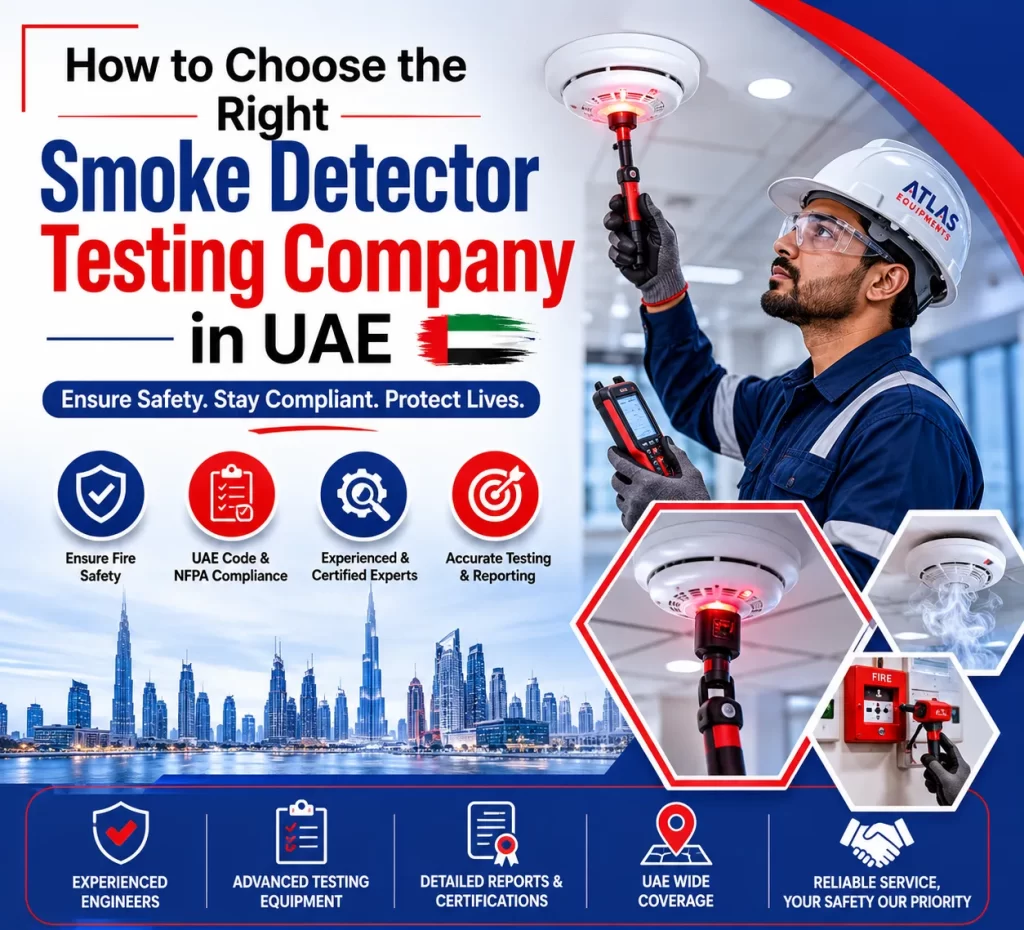
Introduction
Smoke Detector Testing plays a critical role in protecting commercial buildings, warehouses, manufacturing facilities, and industrial properties across the UAE. Fire safety systems are often the first line of defense during an emergency, and even a small fault in a smoke detector can lead to delayed evacuation, property damage, or safety risks for employees and visitors. For facility managers and commercial property operators, choosing the right testing company is not simply about completing routine inspections.
It is about ensuring reliable fire detection, meeting UAE fire alarm compliance requirements, and maintaining business continuity. From high-rise office towers in Dubai to industrial warehouses in Abu Dhabi and manufacturing plants in Sharjah, businesses need accurate and professional smoke detector testing services that follow approved procedures and modern testing standards.
A qualified provider can help identify detector sensitivity issues, prevent false alarms, improve emergency preparedness, and support long-term smoke detector maintenance programs. This guide explains what businesses should look for when selecting a smoke detector testing company in the UAE and why proper testing procedures are essential for safety compliance.
Why Smoke Detector Testing Is Important
Smoke detectors are designed to provide early warning during a fire incident. However, detectors can become less effective over time due to dust accumulation, environmental conditions, poor maintenance, or aging components.
In commercial and industrial environments, the risks are even greater because of:
- Heavy machinery operations
- Electrical systems
- High storage loads
- Chemical materials
- Continuous workforce activity
- Large building layouts
Without regular Smoke Detector Testing, a detector may fail to respond correctly during a real emergency. For example, warehouses in the UAE often experience dust buildup and high ceiling challenges that can affect detector performance. Manufacturing facilities may expose detectors to heat, fumes, or airborne particles that reduce sensitivity. Office buildings with centralized HVAC systems may also experience airflow conditions that influence detector accuracy.
Regular testing helps businesses:
- Verify proper detector operation
- Maintain fire alarm compliance
- Reduce false alarms
- Improve occupant safety
- Identify faulty devices early
- Support emergency evacuation readiness
- Maintain insurance and inspection requirements
A professional testing company should understand these operational challenges and tailor testing procedures accordingly.
Understanding UAE Fire Safety Compliance Requirements
Commercial buildings and industrial facilities in the UAE must follow fire safety regulations established by local authorities and civil defense departments. These requirements typically include periodic fire safety inspection UAE procedures, maintenance records, and scheduled detector testing.
Fire alarm systems are expected to remain fully operational throughout the year. Businesses are generally required to maintain the following:
- Functional smoke detectors
- Properly maintained fire alarm panels
- Routine inspection records
- Scheduled detector testing frequency
- Emergency response readiness
Testing providers should understand local compliance standards and maintain proper documentation after inspections.
In many UAE facilities, inspectors review the following:
- Detector response times
- Alarm activation accuracy
- Sensitivity levels
- Device positioning
- Maintenance logs
- Testing reports
Working with an experienced fire alarm testing company helps ensure inspections are completed correctly and documented professionally.
What to Look for in a Smoke Detector Testing Company
Selecting the right service provider requires more than comparing pricing. Commercial property managers should evaluate technical expertise, testing procedures, compliance knowledge, and equipment quality.
Industry Experience
Look for a company with experience handling:
- Warehouses
- Manufacturing plants
- Commercial offices
- Shopping centers
- Hotels
- Healthcare facilities
- High-rise buildings
Each environment has unique fire detection challenges. Industrial facilities may require specialized testing techniques, while commercial buildings may focus more on occupancy safety and evacuation systems.
Certified Testing Equipment
Professional providers should use approved smoke detector tester UAE equipment suitable for different detector models and building conditions.
Modern testing equipment ensures the following:
- Accurate detector activation
- Safe testing procedures
- Reliable performance evaluation
- Minimal disruption to operations
Knowledge of Detector Types
Different properties use various detector technologies, including:
- Optical smoke detectors
- Heat detectors
- Multi-sensor detectors
- Beam detectors
- Addressable fire alarm systems
A qualified testing company should understand how each system operates and how to test it correctly.
Detailed Reporting
Testing reports are essential for compliance tracking and future maintenance planning.
A reliable company should provide the following:
- Inspection summaries
- Fault identification
- Detector performance findings
- Maintenance recommendations
- Compliance documentation
These records are valuable during audits and regulatory inspections.
Importance of Proper Smoke Detector Testing Process
The smoke detector testing process directly affects the accuracy and reliability of fire detection systems. Professional testing involves more than pressing a test button. Proper procedures evaluate real detector response under simulated smoke conditions.
Visual Inspection
Technicians first inspect detectors for the following:
- Dust contamination
- Physical damage
- Incorrect installation
- Obstructions
- Wiring issues
This step helps identify visible faults before functional testing begins.
Functional Testing
During testing, technicians verify:
- Alarm activation
- Signal transmission
- Panel communication
- Response timing
This ensures the detector communicates correctly with the fire alarm system.
Smoke Aerosol Testing
Smoke aerosol testing is commonly used to simulate actual smoke conditions safely and effectively. Specialized aerosol products are introduced into the detector chamber to confirm:
- Smoke sensitivity
- Alarm activation
- Sensor responsiveness
This method provides more accurate results compared to manual simulation methods.
Sensitivity Verification
Over time, detectors may become either too sensitive or insufficiently sensitive. Sensitivity testing helps prevent the following:
- Frequent false alarms
- Delayed fire detection
- System reliability issues
Professional testing companies understand how environmental conditions affect detector performance in commercial and industrial buildings.
Benefits of Using Solo Smoke Tester Equipment
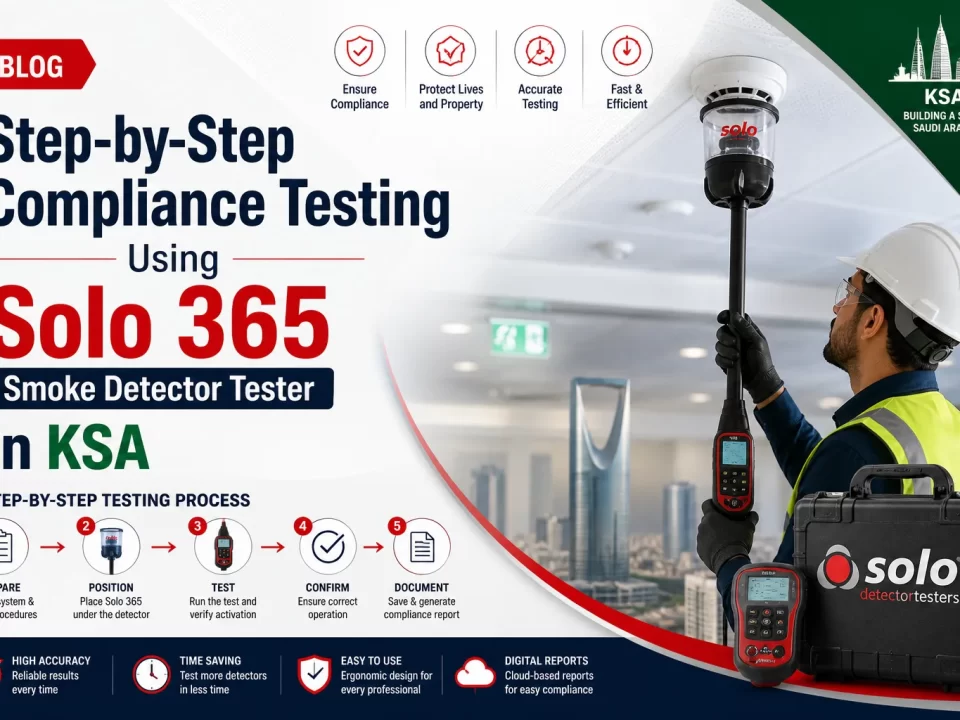
Many professional providers use solo smoke tester equipment because it allows safe and efficient detector testing, especially in high-ceiling environments.
Solo testing systems are widely used for:
- Warehouses
- Shopping malls
- Industrial plants
- Airports
- Commercial towers
Key Benefits
Improved Safety
Technicians can test detectors from ground level using extension poles, reducing ladder-related risks.
Faster Testing
Large facilities can complete inspections more efficiently with reduced operational disruption.
Accurate Detector Activation
Solo systems deliver controlled aerosol smoke directly into the detector chamber for precise testing.
Better Access to High Ceilings
Industrial warehouses and logistics facilities in the UAE often have elevated detector installations. Solo equipment allows easier access without extensive lifting equipment. Companies such as Novus provide professional fire safety solutions and testing support for commercial environments where efficient detector testing is essential.
Detector Testing Frequency for Commercial and Industrial Buildings
Detector testing frequency depends on building type, occupancy, environmental conditions, and local fire safety requirements. However, most commercial and industrial properties should follow scheduled inspections throughout the year.
Facilities That May Require More Frequent Testing
- Manufacturing plants
- Warehouses
- Chemical facilities
- Food processing units
- Industrial workshops
- High-dust environments
Dust, humidity, heat, and airborne particles can affect detector sensitivity faster in these environments.
Typical Testing Activities Include
- Weekly panel checks
- Monthly visual inspections
- Quarterly detector testing
- Annual full system inspections
A professional provider can help create a maintenance schedule tailored to the property’s operational risks and compliance obligations.
Common Mistakes to Avoid When Choosing a Testing Provider
Choosing Based Only on Low Cost
Low-cost services may skip important testing procedures or use outdated equipment. Incomplete testing can create serious compliance and safety risks.
Ignoring Industry Experience
A provider unfamiliar with industrial facilities may not understand warehouse airflow conditions, machinery interference, or high-ceiling detector access requirements.
Lack of Documentation
Missing inspection reports can create problems during audits and fire safety inspections.
Using Inappropriate Testing Methods
Improper manual testing methods may fail to verify the actual detector sensitivity accurately. Professional smoke aerosol testing and approved equipment are important for reliable results.
No Preventive Maintenance Support
Testing should be part of a broader smoke detector maintenance strategy rather than a one-time inspection. Experienced providers often help businesses identify recurring issues and plan preventive maintenance activities. Novus Fire and Security LLC supports commercial and industrial clients with fire safety testing solutions designed for accurate inspections and compliance-focused maintenance programs.
Conclusion
Choosing the right Novus smoke detector testing company in the UAE is essential for maintaining building safety, operational continuity, and fire alarm compliance. Commercial properties, industrial facilities, and warehouses require reliable testing procedures that go beyond basic inspections.
An experienced provider should understand local compliance requirements, use approved testing equipment, follow proper smoke detector testing process standards, and provide detailed inspection reporting. Regular testing not only supports fire safety inspection UAE requirements but also helps businesses reduce false alarms, improve emergency preparedness, and protect employees, visitors, and assets.
For facility managers and industrial operators, investing in professional smoke detector maintenance and testing services is an important step toward long-term building safety and regulatory compliance.
FAQs
Q1. What is Smoke Detector Testing?
A1. Smoke Detector Testing is the process of inspecting and verifying that smoke detectors respond correctly during fire alarm activation scenarios.
Q2. How often should smoke detectors be tested in commercial buildings?
A2. Detector testing frequency depends on the property type and operating environment. Industrial facilities and warehouses may require more frequent inspections due to dust and environmental conditions.
Q3. Why is smoke aerosol testing important?
A3. Smoke aerosol testing simulates real smoke conditions to confirm proper detector sensitivity and alarm activation accuracy.
Q4. What is a solo smoke tester?
A4. A solo smoke tester is specialized equipment used to test smoke detectors safely from ground level, especially in high-ceiling buildings.
Q5. Why is fire alarm compliance important in the UAE?
A5. Fire alarm compliance helps businesses meet UAE safety regulations, maintain emergency readiness, and reduce risks during fire incidents.
Q6. Can smoke detectors fail without visible damage?
A6. Yes. Detectors may lose sensitivity over time because of dust, aging components, humidity, or environmental contamination.