Choosing the Right Smoke Detector Testing Equipment Supplier in Egypt
June 22, 2026
Heat Detector Testing Requirements and Fire Safety Standards in Qatar
June 23, 2026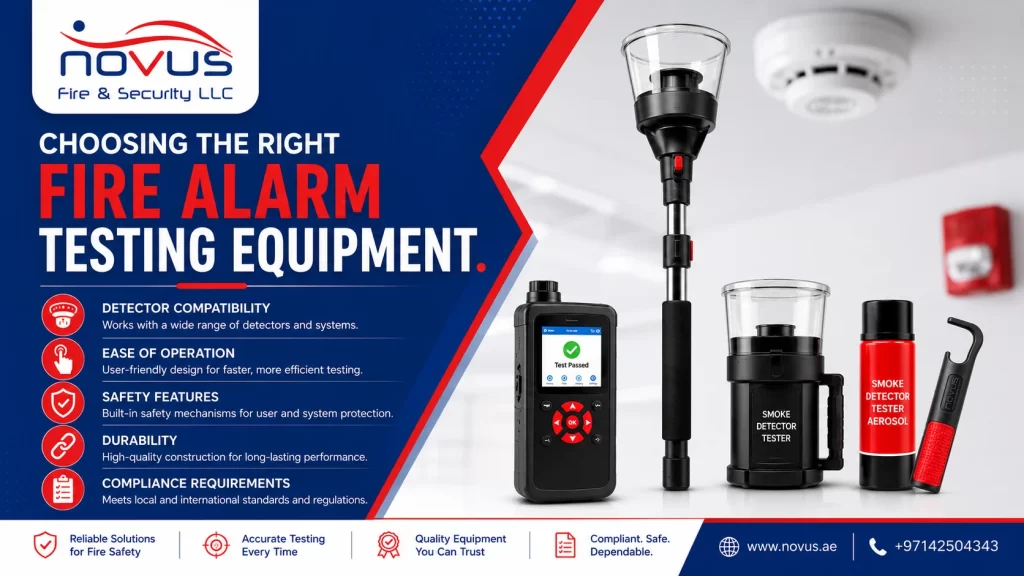
Fire safety is essential for commercial buildings, industrial plants, hospitals, hotels, schools, and government facilities throughout Egypt. Reliable fire detection systems help protect lives and property, but they are only effective when regularly maintained and inspected. Using professional fire alarm testing equipment ensures that smoke and heat detectors respond correctly during emergencies and comply with safety standards.
Routine fire alarm testing helps identify faulty devices before they become a safety risk. Proper maintenance combined with scheduled fire alarm testing and inspection allows facility managers to improve system reliability, reduce false alarms, and ensure uninterrupted protection. Whether managing a manufacturing plant or a high-rise office building, investing in quality testing tools is an important part of a comprehensive fire safety program.
Why Fire Alarm Testing and Inspection Is Important
Fire alarm systems operate continuously and must be tested regularly to ensure optimal performance. A well-planned inspection program helps detect problems early and ensures that the entire system functions properly during emergencies.
Benefits of regular testing include:
- Enhanced life safety and property protection.
- Reduced false alarms and unnecessary downtime.
- Improved system reliability.
- Compliance with local fire safety regulations.
- Early identification of damaged or contaminated detectors.
- Lower long-term maintenance costs.
Routine fire alarm system inspections also help organizations comply with insurance requirements and meet industry standards.
Understanding Fire Alarm Testing Equipment
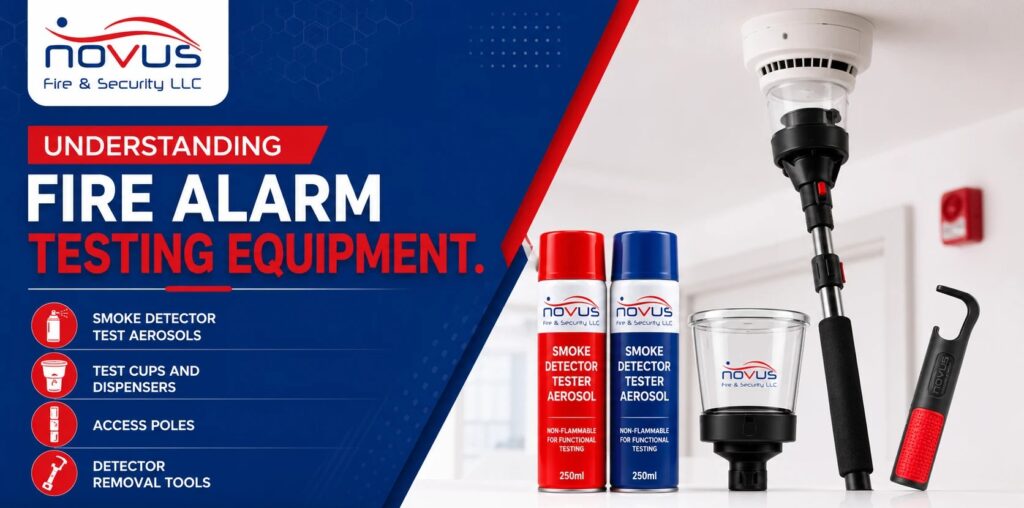
Modern testing tools allow technicians to safely and efficiently inspect smoke and heat detectors without causing contamination or damage. Different types of equipment are designed for specific detector technologies and applications.
Smoke Detector Test Aerosols
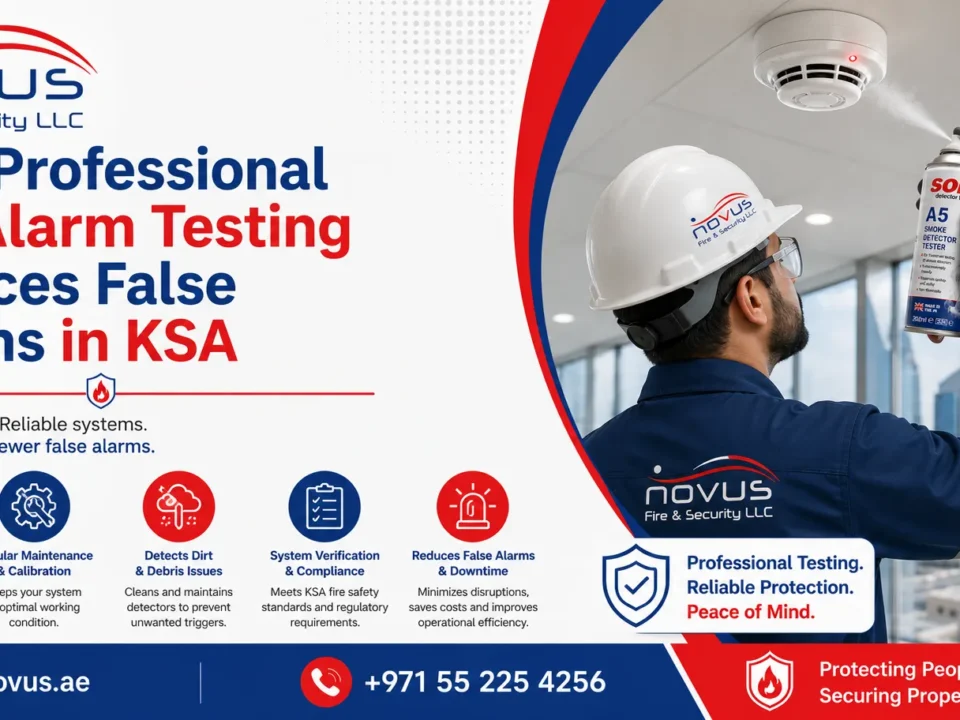
Smoke detector aerosols simulate smoke particles to activate optical detectors and verify their response. They provide quick and accurate testing while reducing maintenance time.
Test Cups and Dispensers
These accessories deliver controlled amounts of test smoke to detectors, improving efficiency and minimizing waste.
Access Poles
Telescopic access poles enable technicians to test ceiling-mounted detectors safely without ladders, especially in warehouses and commercial facilities.
Detector Removal Tools
Removal tools simplify maintenance procedures by allowing detectors to be removed and reinstalled without damaging components.
Importance of Using a Fire Alarm Heat Detector Tester
Heat detectors require specialized equipment because they respond to temperature changes rather than smoke particles. A professional fire alarm heat detector tester generates controlled heat to verify detector activation safely and accurately.
Advantages include:
- Accurate detector performance verification.
- Safe testing procedures.
- Reduced risk of detector damage.
- Faster maintenance operations.
- Improved compliance with fire safety requirements.
Industrial facilities, kitchens, warehouses, and manufacturing plants commonly depend on heat detectors, making regular testing critical.
A complete fire alarm inspection involves examining every major component within the system. Maintenance personnel should verify that detectors, control panels, and notification devices operate properly together.
Visual Inspection
Technicians inspect detectors and devices for dirt, corrosion, or physical damage.
Functional Testing
Smoke and heat detectors are activated to confirm that signals are transmitted correctly to the control panel.
Panel Verification
Alarm panels and communication systems are checked to ensure proper operation.
Battery and Power Supply Testing
Backup batteries and power sources are inspected to confirm they provide emergency operation when needed.
Documentation
Maintenance reports help facility managers maintain compliance records and schedule future inspections. Comprehensive fire alarm system inspection programs reduce risks and support dependable fire protection.
Best Practices for Fire Alarm System Testing
Regular fire alarm system testing should follow manufacturer guidelines and established safety procedures.
Use Certified Testing Equipment
Professional tools provide accurate results and protect detector components.
Train Maintenance Personnel
Qualified technicians understand correct testing procedures and minimize the risk of errors.
Follow Scheduled Maintenance Programs
Routine inspections prevent unexpected failures and improve system reliability.
Maintain Inspection Records
Detailed reports simplify audits and regulatory compliance requirements. High-quality detector testing solutions supplied by Novus Fire and Security LLC help fire safety professionals perform inspections efficiently and safely.
Choosing the Right Fire Alarm Testing Equipment
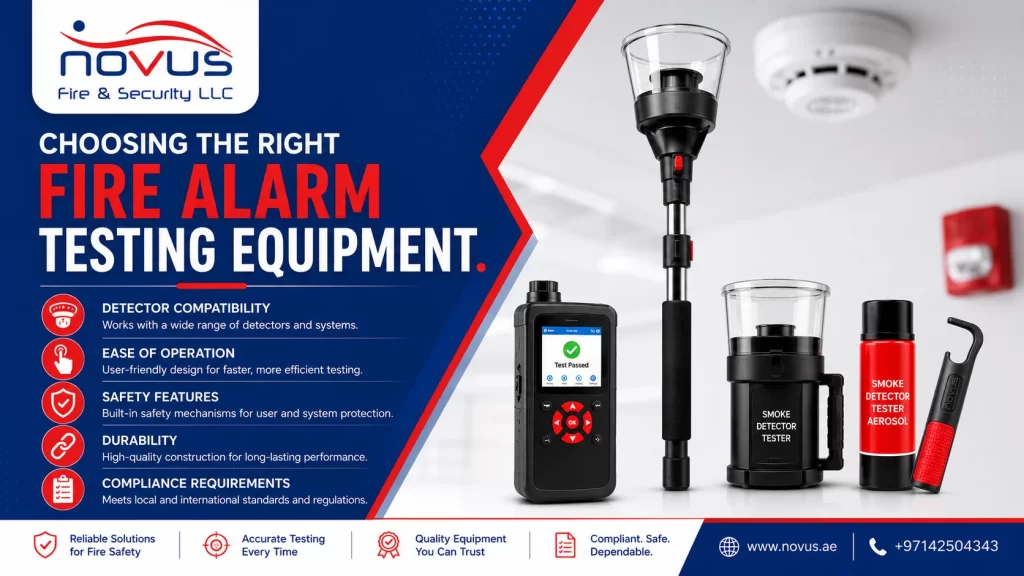
Selecting suitable testing equipment depends on the detector types installed and the facility environment.
Important factors include:
Detector Compatibility
Ensure the equipment supports optical smoke detectors, heat detectors, and multi-sensor devices.
Ease of Operation
User-friendly equipment reduces testing time and improves technician productivity.
Safety Features
Ground-level testing equipment minimizes the need for ladders and improves workplace safety.
Durability
Reliable products provide long-term performance and reduce replacement costs.
Compliance Requirements
Professional-grade tools help organizations meet inspection regulations and international standards.
Benefits of Regular Fire Alarm Testing and Inspection
Routine maintenance provides significant advantages for Egyptian facilities:
- Improved occupant safety.
- Greater confidence during emergencies.
- Reduced false alarms.
- Better system performance.
- Lower repair expenses.
- Compliance with safety regulations.
- Increased operational efficiency.
Many organizations rely on Novus Fire and Security LLC for dependable detector testing solutions that support effective maintenance programs.
Applications Across Egyptian Facilities
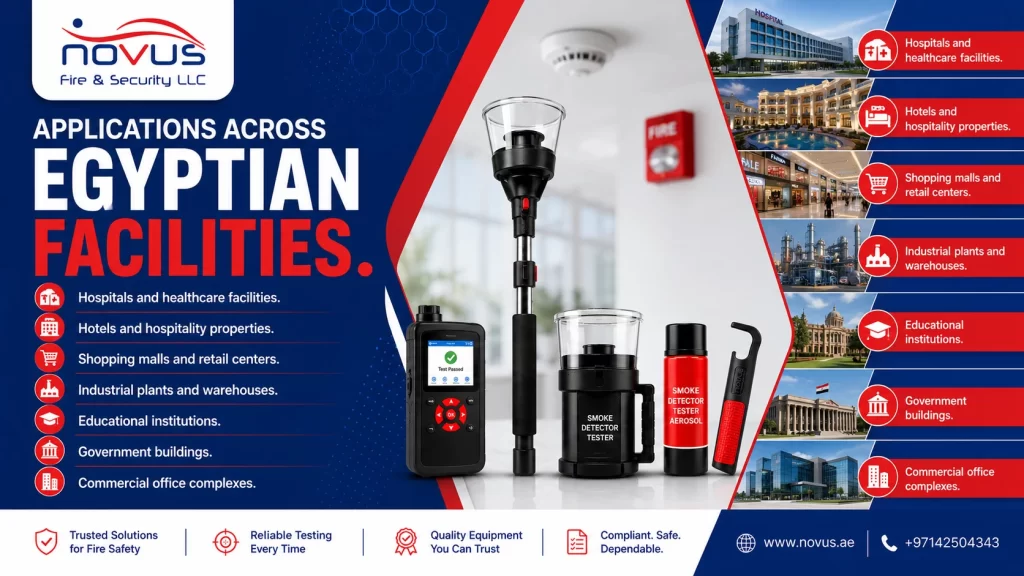
Professional testing equipment is widely used in:
- Hospitals and healthcare facilities.
- Hotels and hospitality properties.
- Shopping malls and retail centers.
- Industrial plants and warehouses.
- Educational institutions.
- Government buildings.
- Commercial office complexes.
Regular testing helps these facilities maintain high safety standards while protecting employees, visitors, and valuable assets.
Request Professional Fire Alarm Testing Solutions Today
Conclusion
Reliable fire protection requires more than installing detectors. Professional fire alarm testing equipment, regular inspections, and specialized tools such as a fire alarm heat detector tester ensure that systems function properly when emergencies occur. By implementing routine fire alarm testing and inspection, Egyptian facilities can improve safety, reduce operational risks, and maintain compliance with industry requirements. Investing in quality testing solutions supports long-term reliability and provides peace of mind for building owners and facility managers.
FAQs
Q1. Why is fire alarm testing equipment important?
A1. Fire alarm testing equipment helps verify detector performance and ensures reliable operation during emergencies.
Q2. What is the purpose of a fire alarm heat detector tester?
A2. A fire alarm heat detector tester safely generates heat to confirm that heat detectors activate correctly.
Q3. How often should a fire alarm system inspection be performed?
A3. Regular inspections should follow manufacturer recommendations and local fire safety regulations.
Q4. Why is fire alarm testing and inspection necessary?
A4. It helps identify faults early, reduce false alarms, and improve life safety.
Q5. What is included in fire alarm system testing?
A5. Testing typically includes detector activation, panel verification, battery checks, and documentation of inspection results.